
Family-owned · Gaithersburg Local
Water Treatment Company in Gaithersburg, MD
Softeners, whole-house filtration, and drinking-water systems, sized to what's actually in your water.
5147 reviews
FreeEst.
Instant Quote
Get an estimate.
We'll follow up within one business day. No pressure, no upsells.
Water Treatment for County and Well Supply
A good water treatment company in Gaithersburg, MD starts by knowing what you're treating, because that depends entirely on where your water comes from. County supply through WSSC runs moderately hard, which is a scale-and-appliance problem. A private well in Damascus, Clarksburg, or Poolesville can bring hardness plus iron, sulfur, or sediment, and those need different equipment. Call (301) 834-2944 and say which you're on.
We'd rather test than sell. A softener, a conditioner, a whole-house filter, and a drinking-water system all solve different problems, and installing the wrong one means you keep the complaint and gain a maintenance chore. Holdsy Plumbing installs softeners, salt-free water conditioners, whole-house filters, and reverse osmosis, and we'll tell you which one your water actually calls for before we quote anything.
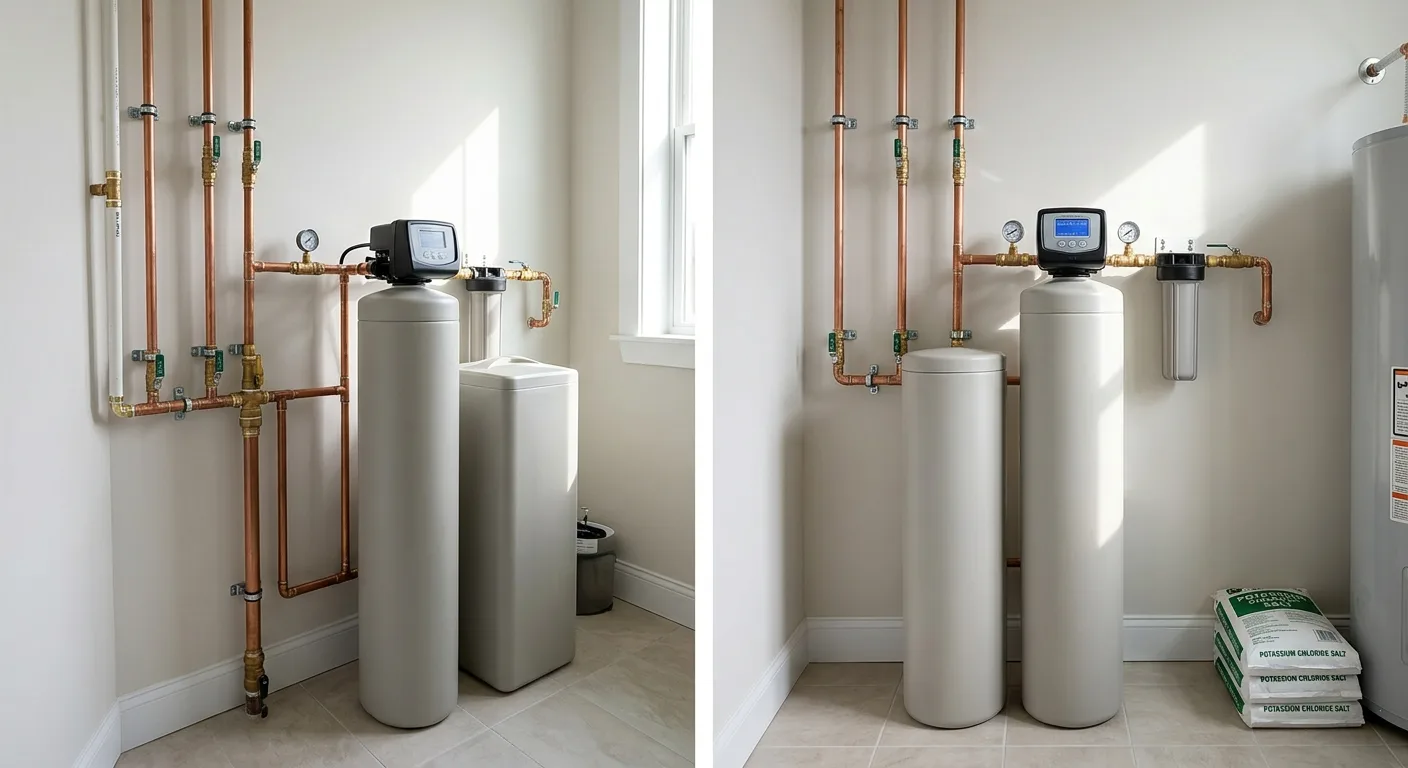
Which System Solves Which Problem
Details below
Sediment, chlorine taste, whole-house
Drinking and cooking water
Well water with iron or sulfur
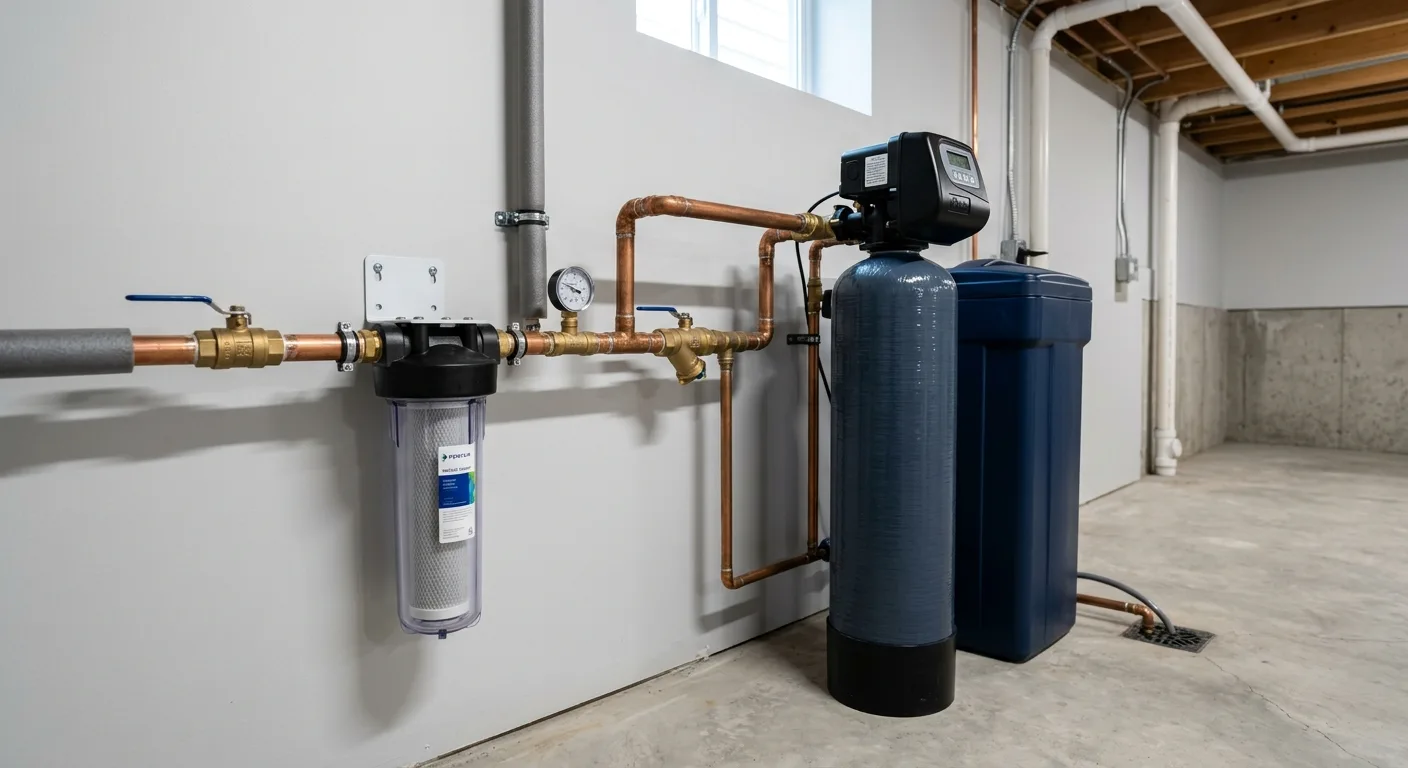
Water treatment detail in a Maryland home
Is Gaithersburg Water Hard?
Yes, moderately. County water in Gaithersburg comes from WSSC and generally falls in the moderately hard range, roughly 7 to 11 grains per gallon depending on the source and the time of year. That's enough to leave scale on fixtures, spot the glassware, stiffen laundry, and shorten water heater life over the years, though it isn't the extreme hardness you'd see in some parts of the country.
Wells in the upper county tell a different story. Private supply around Damascus, Clarksburg, and Poolesville is frequently harder than WSSC water, and it often carries iron or sulfur on top of the hardness, which is exactly why we test what's actually in your water rather than assume. At this hardness level you have a real choice between softening the water outright and conditioning it. A softener removes the calcium and magnesium and gives you the slick soft-water feel; salt-free conditioning leaves the minerals in but treats them so they scale less. If the scale is your only complaint, conditioning may be enough. If you want the soft-water feel too, that's a softener. Call (301) 834-2944 and we'll test before we point you at either.
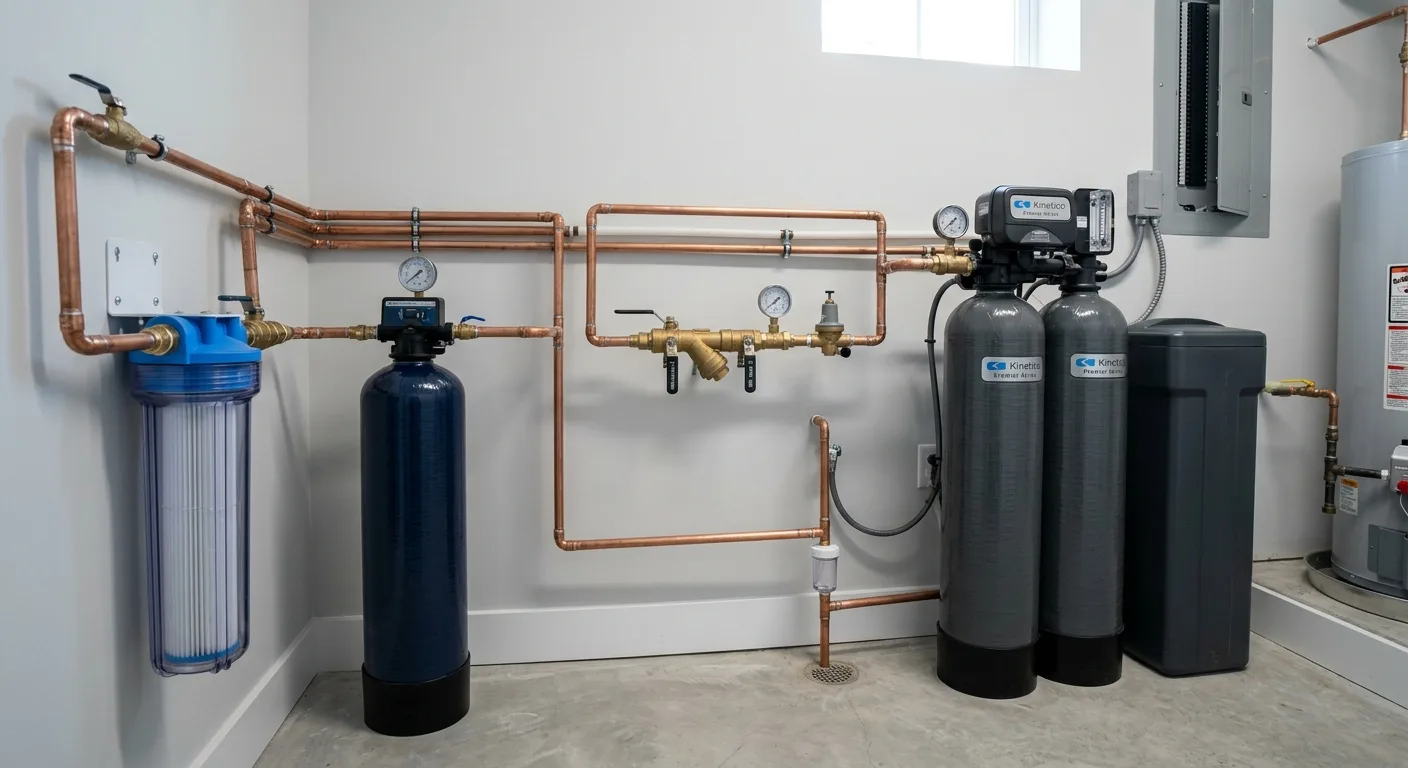
Water treatment detail in a Maryland home
Softener, Filter, or Both
These get used interchangeably in conversation and they aren't the same thing. A softener removes the calcium and magnesium that cause hardness, using an ion exchange resin that needs salt. A filter removes particulate, chlorine, taste, and odor. If your complaint is spotty glassware and scale on the kettle, a filter won't help you; if it's a chlorine smell, a softener won't.
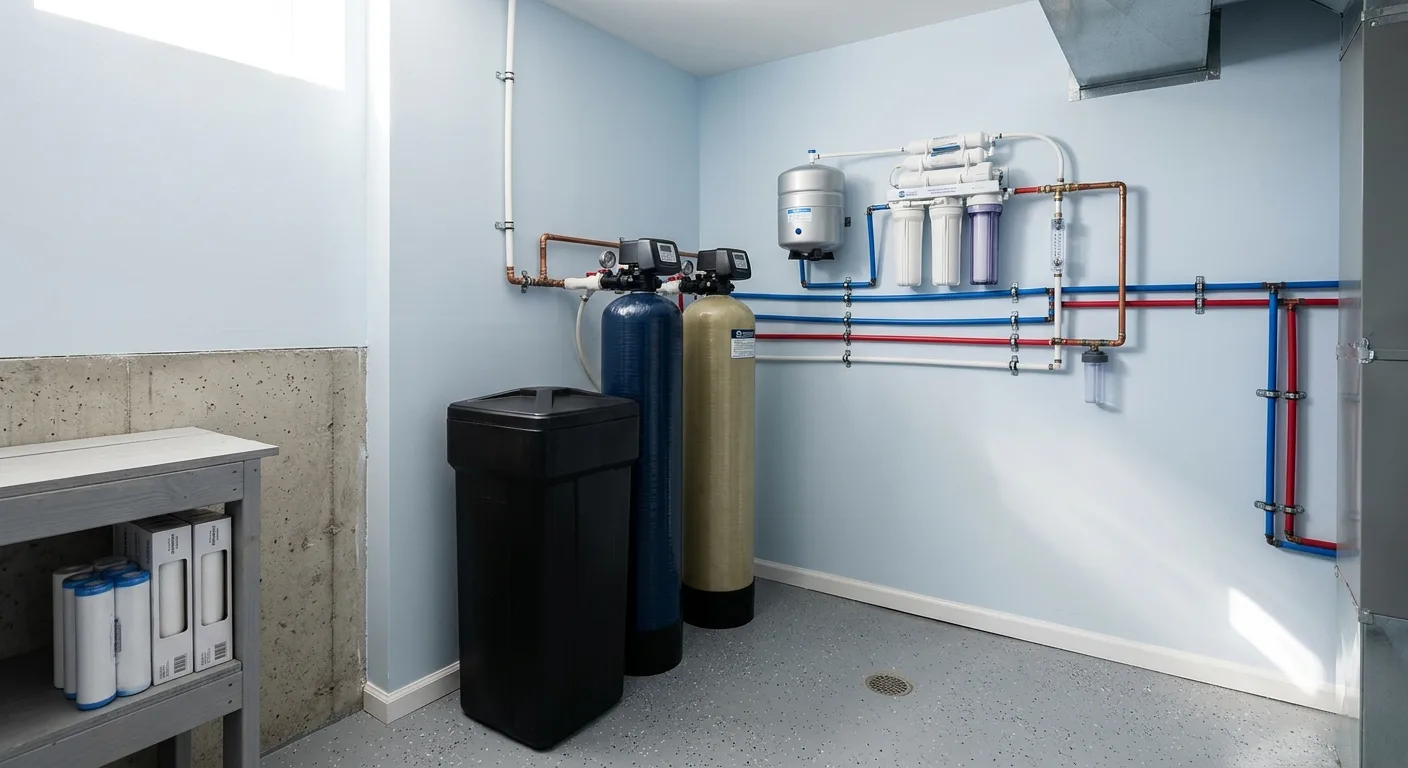
Reverse osmosis is a third category, and it's for drinking water rather than the house. It produces very clean water slowly into a small tank under the sink, which is why it goes at the kitchen rather than the main.
The common Montgomery County setup is a softener at the main for appliance protection, and RO at the kitchen sink for what you drink. Well homes often add sediment or iron treatment ahead of the softener, because sending iron through softener resin fouls it early.
Completed water treatment in a Maryland home
What Ownership Actually Involves
A softener needs salt, and how often depends on your hardness and how much water the household uses. That's the honest answer; anyone quoting you a bag-per-month figure without knowing either number is guessing.
Filters need cartridges on a schedule, and the schedule is set by your water and your usage rather than by the calendar on the box. RO membranes last years, while the pre-filters ahead of them don't.
None of that is difficult, but it's real, and it's the part that gets skipped in a sales conversation. Ask (301) 834-2944 what a given system will actually ask of you before you buy it. Filter replacement is a service we do if you'd rather not.
Water treatment detail in a Maryland home
Water Conditioner vs Water Softener in Gaithersburg, MD
A water conditioner and a water softener get sold as the same thing, and they aren't. A softener actually removes the calcium and magnesium through ion exchange, so the water leaving it is genuinely soft and reads near zero on a hardness test. A conditioner, usually a salt-free TAC unit, leaves the minerals in the water but changes their form so they're less likely to stick as scale. No salt, no drain line, no backwash.
So which one you want in Gaithersburg comes down to what you're actually after. If you want the slick-feeling shower water, spot-free glassware, and softer laundry, that's a water softener, because those are effects of removing the minerals. If your only goal is protecting a tankless heater and the plumbing from scale, and you'd rather skip the salt and the regeneration, a conditioner is a reasonable call. It won't give you the classic soft-water feel, and anyone telling you a salt-free unit produces zero-hardness water is overselling it.
On moderately hard WSSC county water, either can make sense. On a harder well up in Damascus or Clarksburg, especially with iron in the mix, a true softener with the right pre-treatment usually wins, because a conditioner does nothing for staining. Call (301) 834-2944 and tell us which effect you're chasing before you commit to either.
Water treatment detail in a Maryland home
Gaithersburg Reverse Osmosis for Drinking Water
Reverse osmosis is the one people ask about by name, and it sits in a different job than the softener or whole-house filter. A Gaithersburg reverse osmosis system installs under the kitchen sink and pushes water through a fine membrane that strips out dissolved solids, so what comes out of the RO faucet is close to bottled quality. It's for what you drink and cook with, not for the whole house.
"You don't run the whole house through RO. Pair a softener at the main with RO at the sink, and each system does the part it's good at."
That's the point most homeowners miss. You don't run the whole house through RO, because it produces slowly into a small holding tank and there's no reason to demineralize your shower water. Pair it with a softener at the main and RO at the sink, and each system does the part it's good at. The membrane lasts years; the sediment and carbon pre-filters ahead of it get changed on a schedule. See the full reverse osmosis drinking water system page for how we size and service them.
On a well, RO is often the piece that finally makes the water taste right after softening and iron removal have handled the rest. We'll tell you where it belongs in the sequence instead of leading with the most expensive box.
Free, no-pressure estimate
Find Out What's in Your Water First
Tell us whether you're on county water or a well and what you're noticing: spots, staining, smell, taste. Call (301) 834-2944, or request a free estimate through the contact form.
Call now (301) 834-2944 5 · 147 Google reviews
Or send us your info
FAQ Common questions
Frequently Asked Questions
Answers below
Is Gaithersburg water hard? +
Yes, moderately. Public water in Gaithersburg comes from WSSC and generally falls in the moderately hard range, roughly 7 to 11 grains per gallon depending on the source and time of year. That's enough to leave scale on fixtures, spot glassware, and shorten water heater life over the years, though it isn't extreme. Private wells in the upper county, around Damascus, Clarksburg, and Poolesville, are frequently harder and can also carry iron or sulfur, which is why we test rather than assume.
What is the difference between a water conditioner and a water softener? +
A softener removes the calcium and magnesium through ion exchange using salt, so the water reads near zero on a hardness test. A conditioner, usually a salt-free unit, leaves the minerals in but changes their form so they scale less. A softener gives you the classic soft-water feel and spot-free glasses; a conditioner mainly protects plumbing and appliances from scale without salt or a drain line. Which one fits depends on what you're trying to fix.
Is Montgomery County water hard enough to need a softener? +
County water supplied by WSSC falls in the moderately hard range, which is enough to leave scale on fixtures and shorten water heater life over time. Whether that justifies a softener depends on how much it bothers you and what your appliances are worth to you. Private wells in the upper county are frequently harder.
Do I need a softener and a filter? +
Only if you have both problems. A softener handles hardness; a filter handles sediment, chlorine, taste, and odor. Plenty of homes need one and not the other. Testing first is cheaper than buying twice.
My well water smells like rotten eggs. Will a softener fix it? +
No. That smell is typically hydrogen sulfide, and it needs treatment aimed at sulfur rather than hardness. Sending it through a softener won't remove it and can foul the resin. This is a case where the water test decides the equipment.
Can you service a system another company installed? +
Yes, including cartridge changes, resin problems, and units that were oversized or undersized for the house. If a system was specified wrong, we'll tell you what it would take to make it right rather than replacing it by default.