No hot water, rusty water, or a tank that's rumbling? You reach the Holdsy Plumbing team directly, not a call center. They tell you straight whether it's a repair or a replacement.
We'll follow up within one business day. No pressure, no upsells.
Straight Answers on Repair, Replacement, Tank, and Tankless
If you need water heater repair in Gaithersburg, MD, your unit failed and you want it working again. Maybe there's no hot water this morning, maybe it's leaking at the base, maybe it's making a noise that finally got your attention. Either way you reach the Holdsy Plumbing team directly at (301) 834-2944. Chase diagnoses the actual failure first: a bad thermocouple or heating element is a repair, a tank leaking from the bottom is a replacement, and a 12-year-old unit that's just slow to recover is a judgment call he'll walk you through honestly. Owner-operated means the person who answers is the person who shows up, and there's no commission riding on selling you the bigger job.
Here's the part that decides most of these calls, and it's specific to where you live. Gaithersburg homes on WSSC water sit in a moderately hard range, and the homes we service on private wells north and west of the city often run harder still. That hardness is what drives sediment to build up in the bottom of a tank and scale to coat the heat exchanger inside a tankless unit. A tank heater in this area that never gets flushed will start rumbling, lose efficiency, and reach the end of its life sooner than the sticker promised. If your tank keeps failing early, the water feeding it is usually the reason, and water treatment is what breaks that cycle. Whether your unit is worth an anode rod and a flush or whether the money is better spent on a replacement comes down to its age, its condition, and how it failed. Chase looks at all three before he quotes anything.
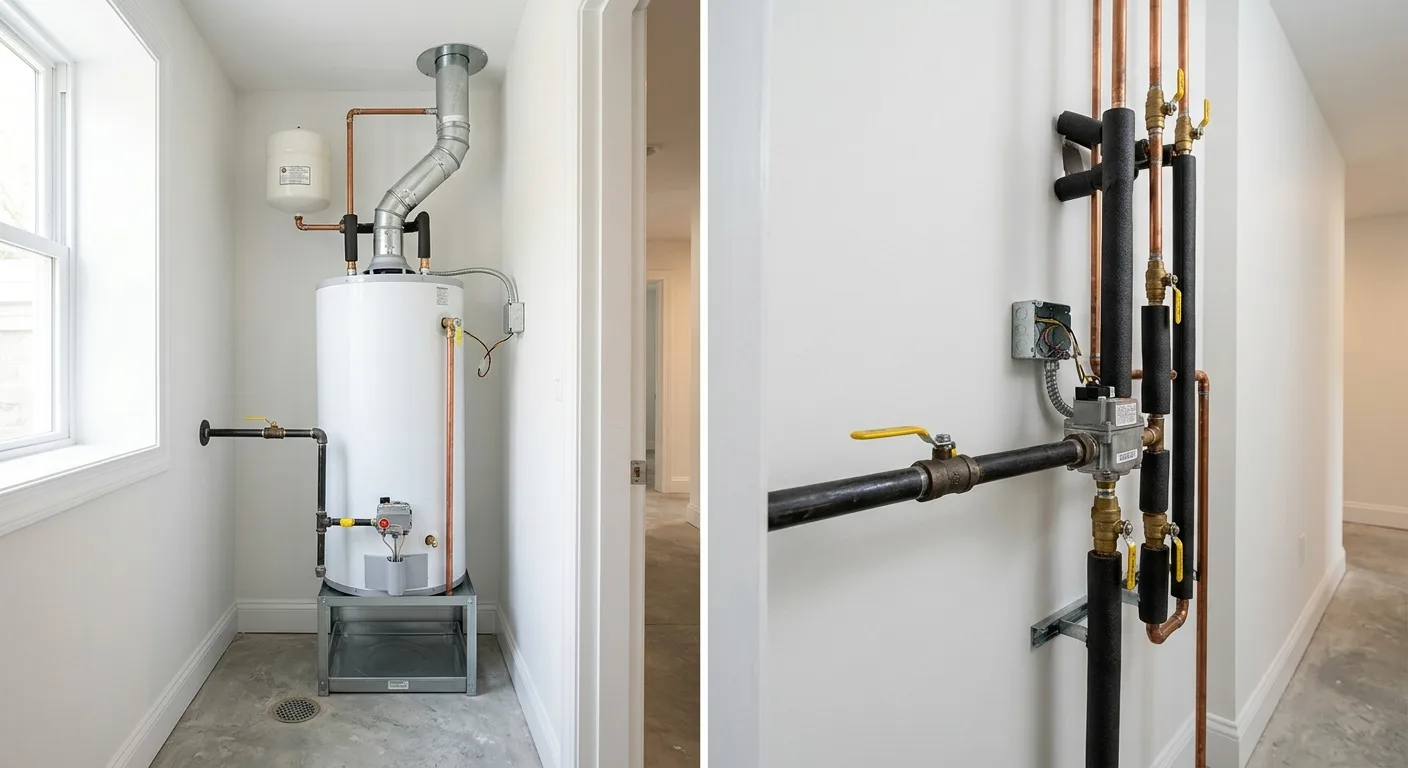
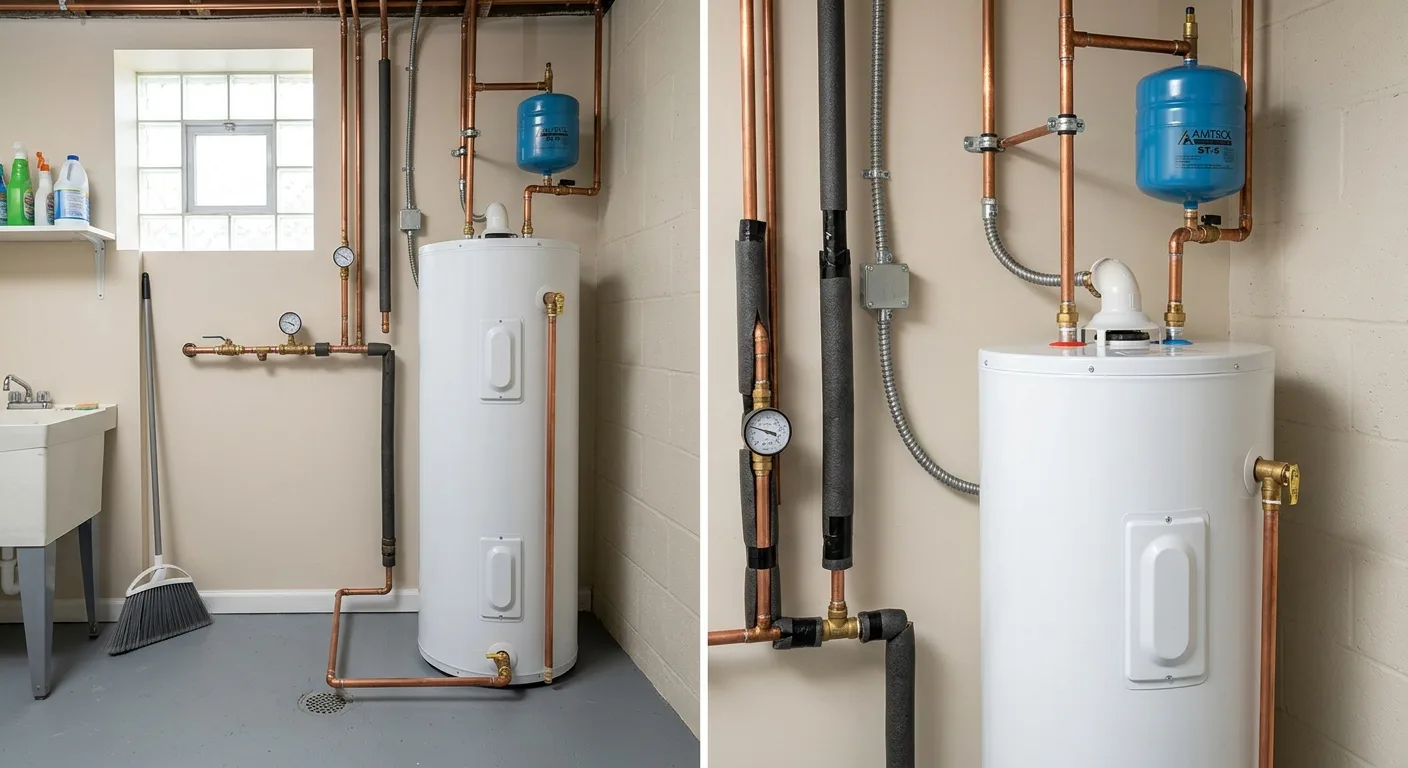
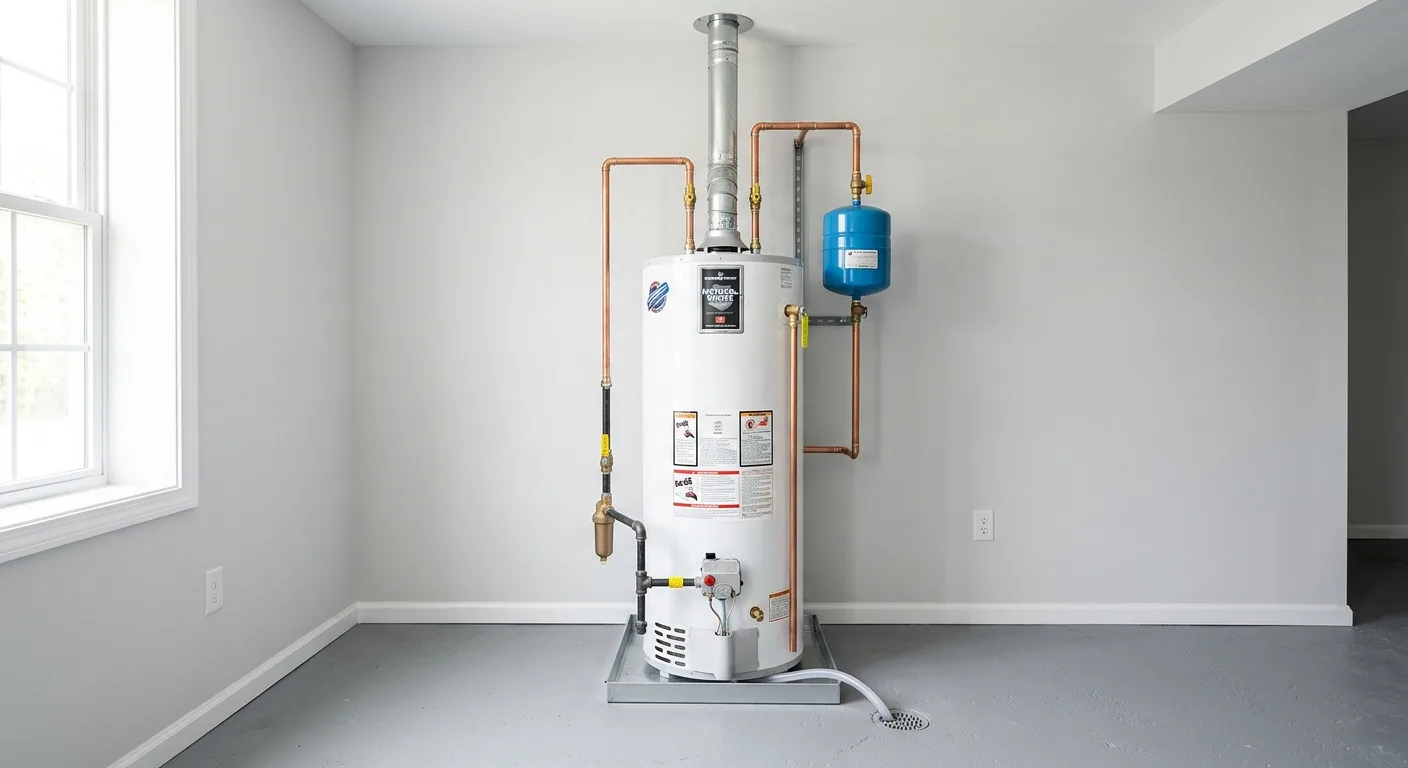
Completed water heaters in a Maryland home
Water Heater Repair vs Replacement: The Cost Factors That Decide It
Repair usually wins when the tank itself is sound and a single component failed: a thermocouple, a gas control valve, a heating element, a thermostat, or the anode rod. Those are hours of work, not a new unit. Replacement wins when the tank is leaking from the body, when it's past roughly 12 years old and failing, or when the repair cost climbs close to the price of a new heater on a unit that's near the end anyway. The dividing line is the tank itself: a leak from a fitting or valve is fixable, a leak weeping from the steel bottom is not.
There's no honest flat dollar number for either path, because the cost tracks factors specific to your unit and your house. Here's how the main ones push the decision:
Factor
Points toward repair
Points toward replacement
Age of the unit
Under about 8 years and out of the wear-out window
Past roughly 12 years, the typical end of a tank's life
Where it's leaking
A fitting, drain valve, or connection you can isolate
Weeping from the steel tank body itself
Tank vs tankless
Tank component swap or a scale descale on a tankless
A tank-to-tankless conversion adds gas, venting, and sometimes electrical work
Gas vs electric
Electric element or thermostat, gas thermocouple or valve
Multiple failures or a corroded gas control on an old unit
Sediment and hard-water condition
Sediment noise on a young tank a flush can fix
Heavy scale, rusty water, and a tank that was never flushed
What Chase won't do is quote you a replacement over the phone sight unseen because it's the easier sale. He looks at the age, where it's leaking from, how it failed, and whether the tank has been maintained, then tells you which way the math actually points. If a repair buys you real years, that's the recommendation. If replacement is genuinely the smarter spend, he'll walk you through when replacement beats repair or going tankless instead. Planning a replacement rather than reacting to a failure? Request a free estimate through the contact form.
The warning signs
What a Failing Water Heater Is Telling You
Details below
Most water heaters give you notice before they quit for good. These are the signals worth acting on, roughly in order of how urgent they are. If you're seeing more than one, the unit is further along than a single symptom suggests.
Rusty or discolored hot water
Brown or reddish water on the hot side points to corrosion inside the tank or a spent anode rod that's stopped protecting the steel. Caught early, a fresh anode rod can add years. Caught late, the rust means the tank is corroding from the inside and replacement is coming.
Popping or rumbling from the tank
That sound is a sediment layer on the tank bottom, superheating water trapped underneath it. It's the single most common water-heater noise in a Montgomery County home, and it's a direct result of hard-water sediment that never got flushed. A flush can quiet it if the tank is otherwise sound.
Water pooling at the base
A little moisture can be a loose fitting or a bad drain valve, both fixable. A steady puddle from under the tank body is the tank itself failing, and no repair brings that back. If it's leaking from the bottom, stop and call before it lets go all at once.
Longer and longer recovery times
If the hot water runs out faster than it used to and takes forever to come back, sediment is insulating the burner or a heating element is failing. On a newer tank that's a repair. On an older one it's often the first sign the unit is winding down.
No hot water tonight
Water heaters detail in a Maryland home
No hot water tonight
Emergency: No Hot Water in Gaithersburg Right Now
No hot water tonight is not always an emergency, but a tank leaking onto the floor is. Start with the fast checks before you assume the worst. On an electric heater, a tripped breaker or a lukewarm-then-cold pattern usually means one heating element, not a dead unit. On a gas heater, a pilot that won't stay lit points at the thermocouple. Either of those is a same-day repair, not a replacement, and describing the symptom on the phone often tells Chase which one you've got before he loads the truck.
Holdsy Plumbing is owner-operated, so an after-hours call reaches Chase directly instead of a dispatch queue. Ready when you are: (301) 834-2944.
Water heaters detail in a Maryland home
Gas vs Electric Water Heater Repair: What's Different
Gas and electric tanks fail in different places, so the repair path isn't the same. On a gas water heater, the usual suspects are the thermocouple or flame sensor, the gas control valve, the pilot assembly, or the burner itself, and any gas work also means checking the venting and the gas connection for safety before the panel goes back on. On an electric unit, it's almost always one of the two heating elements or a thermostat, which is why an electric heater will often give you lukewarm water or a slow recovery rather than quitting outright when the upper or lower element burns out.
"Gas or electric, the diagnosis comes first. I'd rather spend twenty minutes finding the actual fault than swap a part and hope. On a gas unit that also means the venting and gas line get checked as part of the job, not skipped."
Chase works on natural gas, propane, and electric tanks, so the diagnosis isn't limited by the fuel type. What matters is finding the real fault before anything gets replaced, the same diagnosis-first process Chase runs on every call. A gas heater with no hot water might need a $30 thermocouple, not a new gas valve, and an electric one that's gone cold might need one element rather than a whole unit. No hot water and not sure which you've got? Call (301) 834-2944 and describe it.
Water heaters detail in a Maryland home
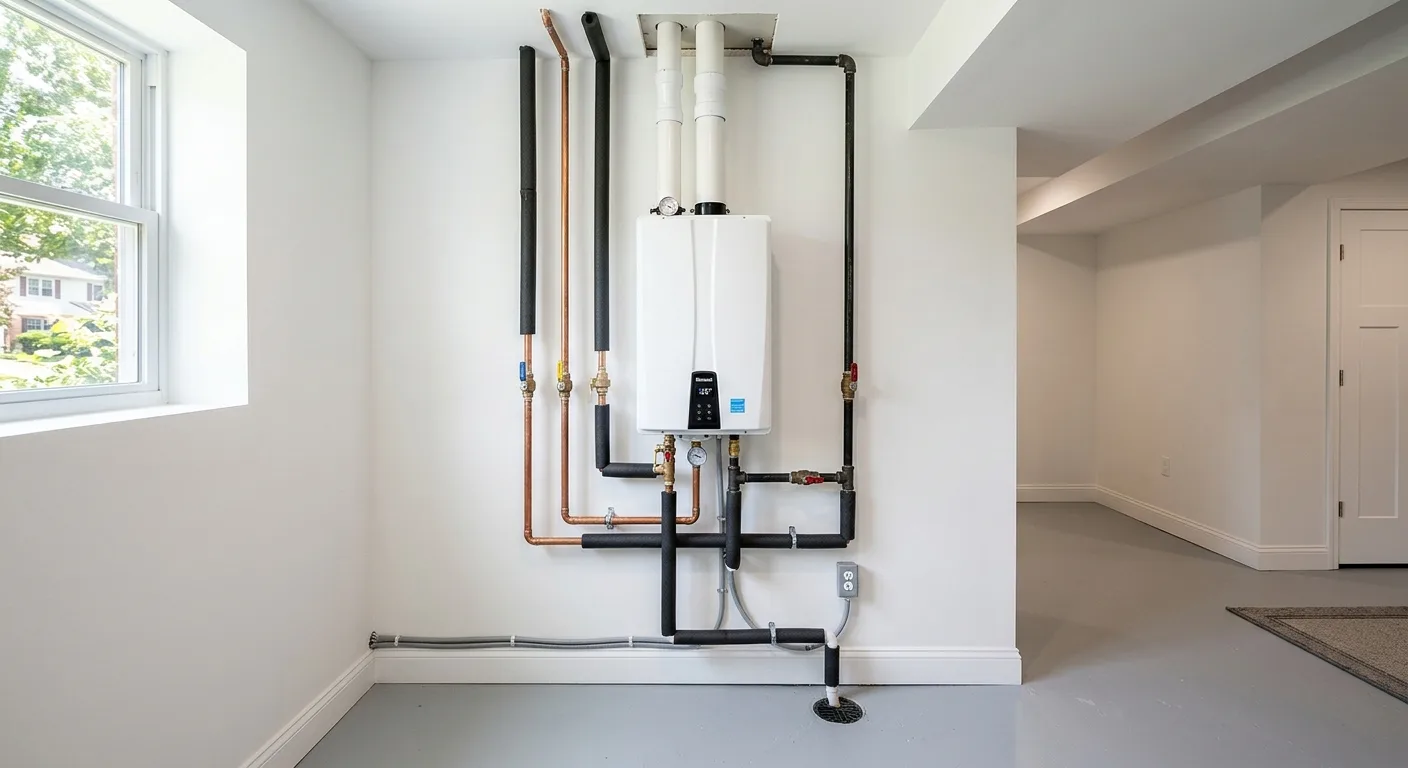
Tankless Water Heater Installation and Repair
Tankless units heat water on demand instead of storing it, so you don't run out mid-shower and you're not paying to keep 50 gallons hot around the clock. The trade-off is that they're less forgiving of hard water. The same Montgomery County hardness that drops sediment into a tank instead builds scale on the tankless heat exchanger, and scale is what kills a tankless unit early if it's never descaled. A tankless heater installed here and left unmaintained will start throwing error codes and losing output within a few years, when a descaling flush on a maintenance interval would have kept it running for a decade or more.
When a tankless upgrade makes sense
Going tankless is a real project, not a like-for-like swap. It often needs a larger gas line, new venting, and sometimes electrical work, which is why the install matters as much as the unit. Chase will tell you honestly whether your home is a good fit or whether a standard tank is the smarter spend for your situation. If you do go tankless, he'll set the descaling interval based on your water so scale never gets the chance to wreck the heat exchanger. Weighing tank against tankless for a planned replacement? Use the contact form for a free estimate and he'll lay out both paths with real numbers.
Water heaters detail in a Maryland home
What a Water Heater Replacement Costs
There's no honest flat number, because the price tracks the unit and the work. A straightforward like-for-like tank swap where the connections all line up is the low end. A tankless conversion that needs a bigger gas line, new venting, or electrical work sits at the high end because it's genuinely more labor. Fuel type, tank size, code-required updates on an older install, and whether the existing shutoffs and fittings are usable all move the number. That's why the range you'll see quoted online is so wide: the jobs behind those numbers aren't the same job.
The one thing you won't get is a lowball number over the phone that doubles when he arrives. Chase quotes off what's actually in front of him. If you want a real figure for a planned replacement, request a free estimate through the contact page and he'll give you one you can plan around.
Completed water heaters in a Maryland home
When You Don't Need a New Water Heater
A straight answer is worth more than a service ticket, so here it is. If your unit is under about eight years old and the only complaint is that it's noisy, you probably don't need a replacement, you need a flush. A sediment flush and an anode-rod check can quiet a rumbling tank and add real years for a fraction of a new install. Plenty of the tanks people are told to replace just needed the maintenance they never got.
And if you've got no hot water on an electric unit that's only a few years old, that's very likely a single heating element or a tripped breaker, not a dead heater. Don't let anyone talk you into a full replacement on a young tank that failed one part. Call Chase at (301) 834-2944, describe the age and the symptom, and half the time he can tell you on the phone whether you're looking at a repair or a replacement before he ever comes out.
Free, no-pressure estimate
No Hot Water, or Planning Ahead?
If there's no hot water or the tank is leaking, call the Holdsy Plumbing team directly at (301) 834-2944 and describe it: gas or electric, the age, what it's doing. Most of the time he can tell you on the phone whether it's urgent and when he can get there. For a planned replacement, use the contact form to request a free estimate.
My water heater is making a popping noise. What is that?+
That popping or rumbling is sediment on the bottom of the tank. Water gets trapped under the sediment layer, superheats, and forces its way up through it, which makes the sound. It's the most common water-heater noise in a Montgomery County home because the water here is moderately hard and drops mineral sediment over time. If the tank is otherwise sound, a flush usually quiets it and buys back some efficiency. If the tank is old and the noise comes with rusty water or a longer recovery, it's a sign the unit is near the end. Chase can tell you which by looking at the age and condition.
How long does a water heater last?+
A conventional tank water heater typically lasts 10 to 15 years, and a tankless unit can run 20 or more with proper descaling. In this area those numbers skew a little shorter for tanks that never get flushed, because hard-water sediment shortens their life. At 12 years with no problems you're in the monitoring window: watch for rusty water, popping, or slower recovery. If you're seeing those, the unit is degrading. Chase can assess whether a flush and an anode-rod check buys you time or whether replacement is the more practical move.
Do you handle both gas and electric water heaters?+
Yes. The Holdsy Plumbing team works on natural gas, propane, and electric tank water heaters, plus gas and electric tankless units. Gas water heater work includes checking the venting and the gas connection for safety as part of the service. Electric units usually fail at a heating element or thermostat, which he diagnoses before replacing anything. Tankless units have their own failure modes, mainly scale buildup in the heat exchanger from hard water, and need specific diagnostic steps.
Is it worth repairing a 12-year-old water heater?+
Sometimes. It depends on what failed and the condition of the tank. If a single component like a thermocouple, element, or gas valve went and the tank itself is sound, a repair can be worth it. If the tank is leaking from the body, or the repair cost approaches the price of a new unit on a heater that's near the end anyway, replacement is the smarter spend. Chase looks at the age, where it's leaking from, and how it failed before recommending either way. He won't push a replacement just because it's the bigger job.
Should I switch to a tankless water heater?+
Maybe. Tankless heats water on demand, so you don't run out and you're not paying to keep a tank hot all day. The catch is the install: it can require a larger gas line, new venting, and sometimes electrical work, so it's a bigger project than a straight tank swap. It also needs periodic descaling because Montgomery County's hard water scales the heat exchanger. For some homes it's clearly worth it, for others a standard tank is the smarter spend. Chase will tell you honestly which fits your home rather than steering you to the pricier option.
How long does a water heater last on hard water?+
Hard water shortens the number you'd expect off the sticker. A conventional tank rated for 10 to 15 years often lands closer to 8 to 12 in a Gaithersburg home if it's never flushed, because mineral sediment builds a layer on the tank bottom that traps heat and stresses the steel. On private wells north and west of the city, where the water runs harder, that window can be shorter still. The fix isn't complicated: an annual flush and an anode-rod check pull most of that lost time back, and treating the water upstream stops the sediment at the source. A tank that gets flushed lives closer to its rated life even here.
Why is my water heater rumbling or making a popping sound?+
That rumble is a sediment layer sitting on the bottom of the tank. Water gets trapped underneath it, superheats, and forces its way up through the sediment, which makes the popping or rumbling you hear. It's the most common water-heater noise we run into in Gaithersburg because the hard water here drops mineral sediment that settles and hardens over time. If the tank is otherwise sound and not too old, a flush usually quiets it and buys back some efficiency. If the rumbling comes with rusty hot water or a slower recovery, the sediment has been building for years and the unit is closer to the end. Chase can tell you which by looking at the age and condition.