
Family-owned · Gaithersburg Local
Well Pump Repair in Gaithersburg and Upper Montgomery County
No water, short cycling, or pressure that won't hold. Diagnosed at the tank and switch first.
5147 reviews
FreeEst.
Instant Quote
Get an estimate.
We'll follow up within one business day. No pressure, no upsells.
Well Pump, Switch, and Pressure Tank Repair
Well pump repair covers more than the pump, and that matters because the pump is the most expensive part and the least often at fault. No water, short cycling, and pressure that won't hold are usually the switch or the pressure tank rather than the pump itself. Call (301) 834-2944 before anyone quotes you a pump.
Plenty of the upper county runs on private wells: Damascus, Clarksburg, Poolesville, and the farms around them. Those homes get a different diagnosis from a house on county water showing the same symptom, which is exactly why a plumber who works on both is worth having.
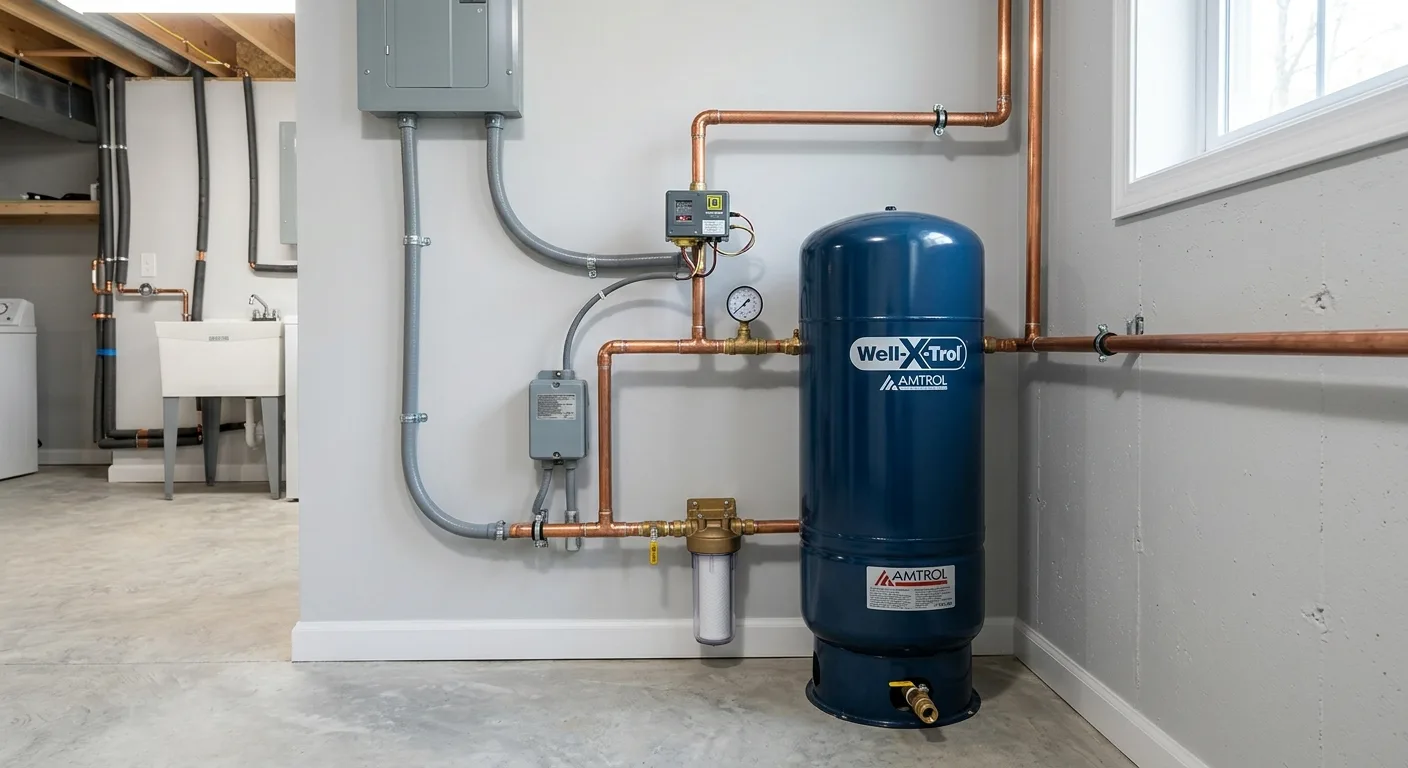
Completed well pump repair in a Maryland home
Short Cycling Points at the Tank, Not the Pump
A pressure tank holds a cushion of air above the water so the pump doesn't restart every time you open a tap. When the bladder fails or the tank waterlogs, that cushion disappears, and the pump kicks on and off rapidly every time you run water. A waterlogged tank is also one of the common reasons a well home suddenly loses steady water pressure at the taps.
That rapid cycling is what destroys pumps. So a homeowner whose pump has burned out often has a failed pressure tank as the actual cause, and replacing the pump without replacing the tank buys you a second failure.
We check tank pre-charge and the pressure switch before condemning anything expensive. A switch is an inexpensive part; a waterlogged tank is a moderate one. Both are cheaper than a pump, and both are more likely.
What the Symptom Usually Means
Details below
Pump runs constantly
Rapid on-off cycling
Sputtering or air at taps
Well pump repair detail in a Maryland home
Wells Bring Water Quality With Them
Well homes here often see hardness plus iron, sulfur, or sediment, and that shortens the life of everything downstream including your water heater. If you're already having pump work done, it's a sensible moment to test the water.
One of our reviews describes a main line from the well pump leaking under the basement floor and outside the house, excavated and repaired. That's the kind of job where the pump, the line, and the water all end up being one conversation. Call (301) 834-2944.
Completed well pump repair in a Maryland home
Submersible vs Jet Pump: Which You Have and Why It Matters
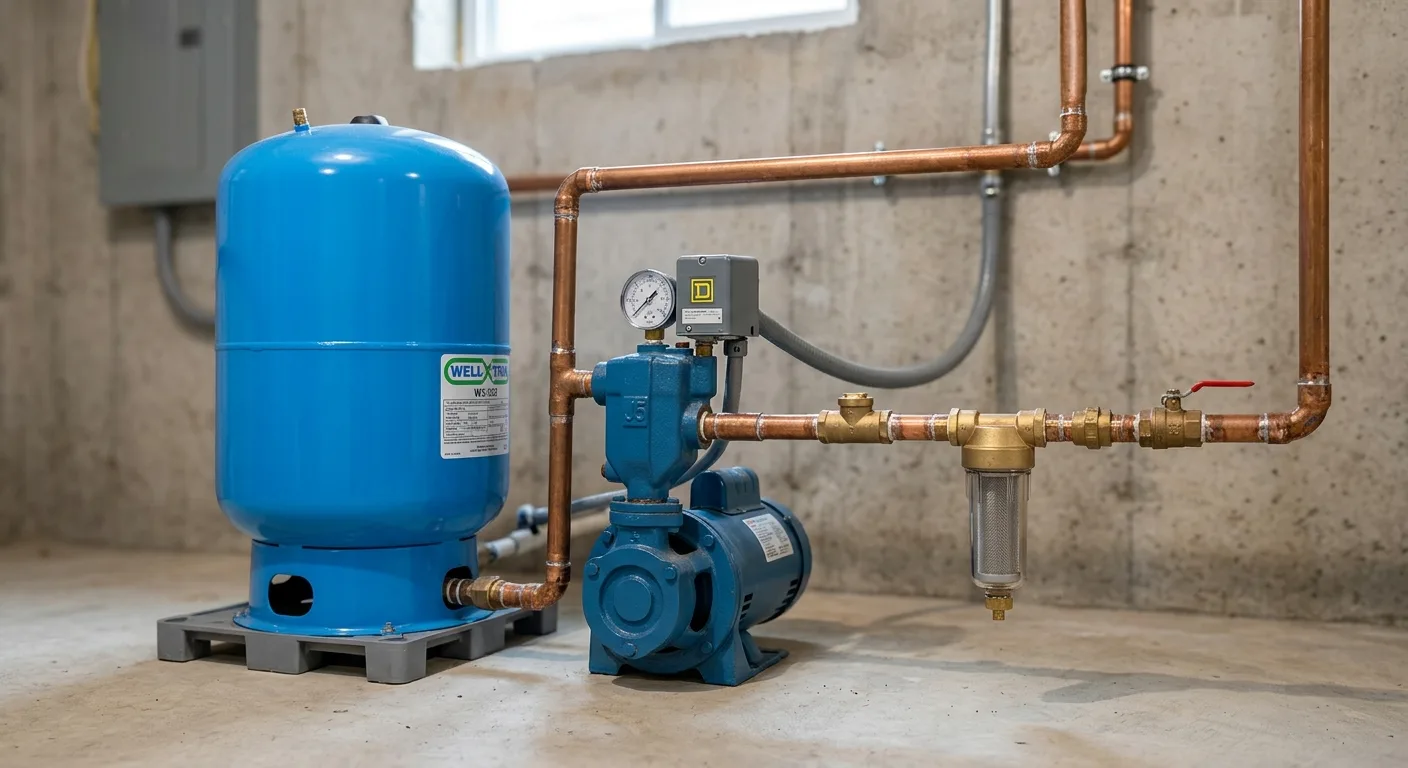
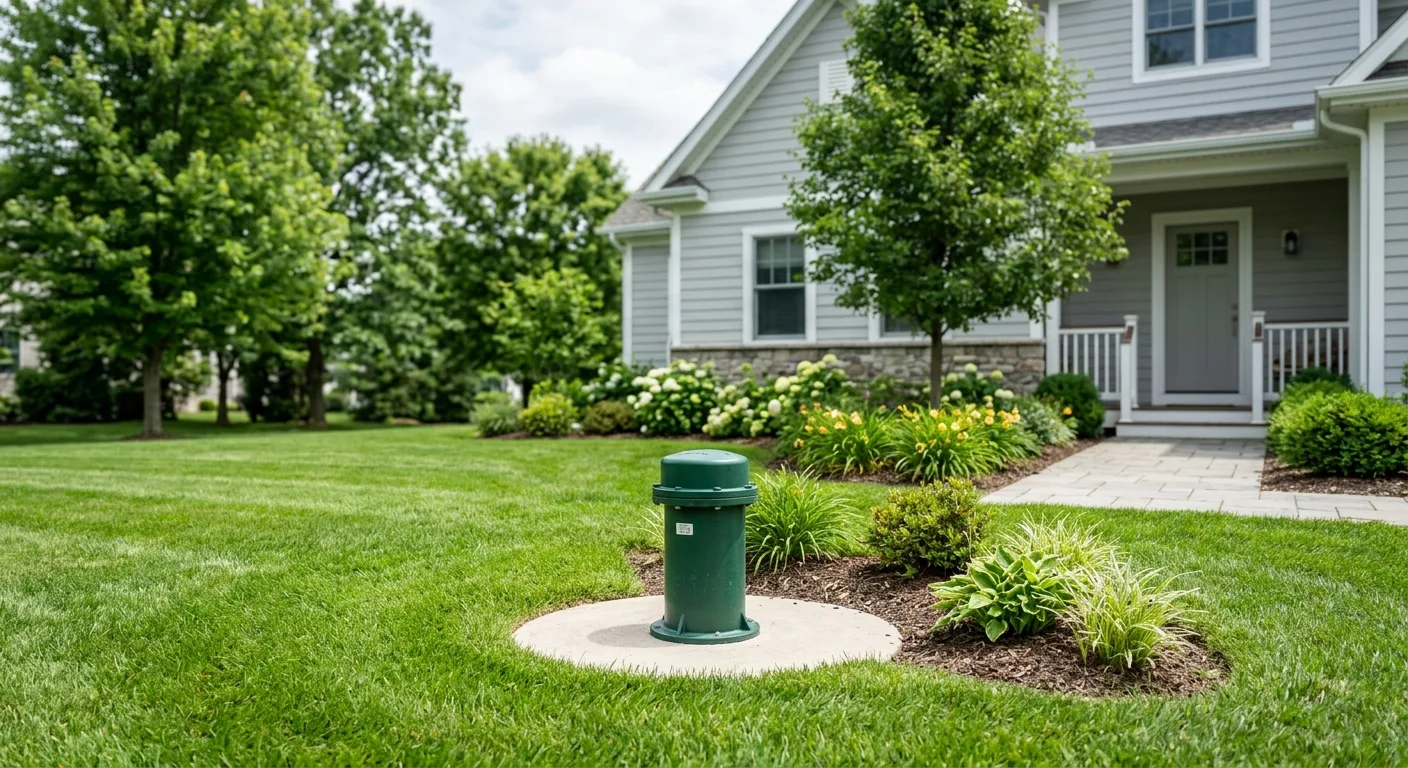
Most of the private wells around Gaithersburg and the upper county are drilled deep, so the pump sitting inside the casing is a submersible: a sealed unit that pushes water up from the bottom of the well. Older or shallow-well properties, more common on the farms out past Poolesville and some of the Damascus properties, run a jet pump that sits above ground near the tank and pulls water up. The two fail differently, and knowing which you have decides the whole diagnosis.
A submersible that quits means pulling the pump and the drop pipe up out of the casing, which is why nobody should condemn one before ruling out the switch and tank first. A jet pump loses its prime, and sputtering or air at the taps points at the suction side rather than a dead motor. Either way, the sequence is the same on both: switch and tank get checked before the expensive part gets touched. Not sure which is under your house? Call (301) 834-2944 and describe what you can see and hear.
Well pump repair detail in a Maryland home
Pressure Tank Replacement: The Fix That Saves the Pump
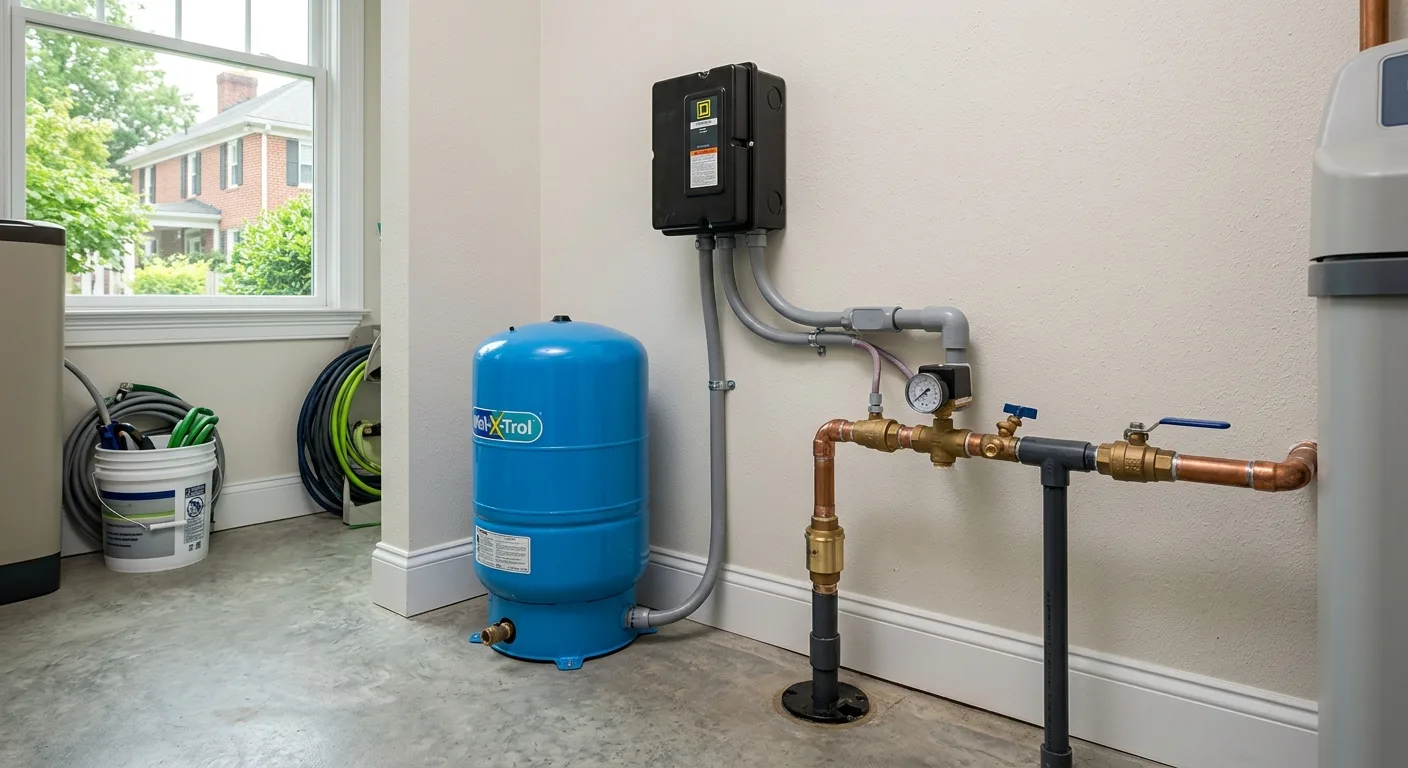
The pressure tank is where a well system quietly wears out, and a waterlogged tank is the single most common reason a well home starts short cycling. Inside the tank is a rubber bladder holding an air cushion above the water. That cushion is what lets the pump fill the tank once and then rest while you draw water down. When the bladder fails, water fills the whole tank, the cushion is gone, and the pump kicks on and off every few seconds every time you open a tap.
"The drawdown is the tell. A healthy tank gives you a good slug of water between pump starts. When you're getting almost none and the pump is hammering on and off, the bladder is gone and it's time for a tank, not a pump."
Replacing a tank is a moderate job and far cheaper than a pump, and doing it also protects the pump you already have, since rapid cycling is exactly what burns a submersible out. We check the tank pre-charge with a gauge and set it a couple of pounds below the switch cut-in, because a tank charged to the wrong pressure short cycles just like a waterlogged one. If you're anywhere in the well belt around Damascus, Clarksburg, or Poolesville and the pump is hammering, the tank is where we look first. Call (301) 834-2944 and tell us how much water you get before it kicks back on.
Well pump repair detail in a Maryland home
Well Pump vs Sump Pump: Don't Confuse the Two
These two get mixed up on the phone constantly, and they're completely unrelated. A well pump brings your drinking water up out of the ground and into the house; if it fails, you lose water pressure and eventually water altogether. A sump pump does the opposite job: it sits in a pit in the basement and pushes groundwater back out, and if it fails you get a wet or flooded basement, not a dry tap.
We repair both, so it's fine to be unsure which you mean when you call. If your taps have gone weak or dry, you're on this page and we start at the switch and tank. If instead you've got standing water in the basement after a storm, that's sump pump repair (not the same as your well pump), and it's a same-day call when rain is coming. Describe the symptom and we'll point you to the right fix.
Free, no-pressure estimate
No Water or a Pump That Won't Stop?
Tell us what the pump is doing and whether you've lost pressure entirely. Call (301) 834-2944.
Call now (301) 834-2944 5 · 147 Google reviews
Or send us your info
FAQ Common questions
Frequently Asked Questions
Answers below
No water from my well pump. What's wrong? +
Start at the cheapest, most common faults before anyone talks about a pump. First check the breaker or the pump's own reset, since a tripped circuit is the number one reason a well home wakes up with no water. Next is the pressure switch: a set of contacts that tell the pump to run, and they burn or stick shut over time. Only after those are ruled out does the pump itself come into question. On the deep drilled wells common around Damascus, Clarksburg, and Poolesville, pulling a submersible is real work, so we confirm it's actually the pump before touching it. Call (301) 834-2944 and tell us whether the pump is trying to run at all.
Why won't my well pump turn on? +
A pump that's dead silent usually points at power or the switch, not the motor. Check the breaker first, then look for a reset button on the pressure switch or the control box. If the switch contacts are corroded or the low-pressure cutoff has tripped, the pump gets no signal to start even though it's perfectly fine. A pump that hums but won't move water is a different problem, often a seized motor or a lost prime on a jet pump. Either way, the switch and power get checked before the expensive part does.
Why is my well pump running constantly and won't shut off? +
A pump that never rests is either losing water somewhere or can't build enough pressure to reach its cutoff. The two usual causes are a leak on the well line or inside the house that keeps pressure from climbing, and a pump that's worn and no longer moving the water it used to. A stuck pressure switch that never opens will also keep it running. Running non-stop overheats and burns out a pump fast, so shut it off at the breaker and call. We start with leak detection on the line before condemning the pump.
My well pump keeps turning on and off rapidly. What's wrong? +
That rapid on-off, called short cycling, is almost always the pressure tank or the pressure switch rather than the pump. The tank holds an air cushion so the pump isn't restarting constantly; when the bladder fails or the tank waterlogs, that cushion is gone and the pump cycles every time you open a tap. The tell is drawdown: a healthy tank gives you a good slug of water between pump starts, and when you're getting almost none the bladder is gone. Left alone, that cycling is exactly what burns pumps out, which is why we check tank pre-charge and the switch before anything expensive.
How do I know if it's the pump or the pressure tank? +
The tank and switch get checked first because they're cheaper and more commonly at fault. Tank pre-charge is measurable, and a failed switch is inexpensive to rule out. Replacing a pump without checking the tank is how people end up doing the job twice.
Do you work on wells outside Gaithersburg? +
Yes, including Damascus, Clarksburg, Poolesville and the surrounding area, which is where most of the private wells in the county are. Tell us where you are when you call.
Can you test my well water at the same time? +
Yes, and it's a sensible pairing. Well water here frequently carries hardness with iron or sulfur, and that affects your heater and fixtures. Handling pump and treatment together avoids two diagnoses of the same water.