5 · 147 Google reviews Serving North Potomac & Montgomery County
Call Holdsy: (301) 834-2944
Holdsy PlumbingHoldsy Plumbing
Gas Line Repair & Installation in Gaithersburg, MD
Family-owned · Gaithersburg Local

Gas Line Repair & Installation in Gaithersburg, MD

Smell gas right now? Leave the house and call Washington Gas or 911 first. For gas line repairs, new lines, and appliance hookups, you reach the Holdsy Plumbing team directly, not a call center.

5147 reviews
Call directly(301) 834-2944
FreeEst.
Instant Quote

Get an estimate.

We'll follow up within one business day. No pressure, no upsells.

No obligation · Responds within 1 business day

Gas Line Repair, Installation, and Leak Response: Safety First

Gas line repair is one of those jobs where the first thing to know isn't who to hire, it's what to do before you dial anyone. If you smell a strong, steady rotten-egg odor, hear hissing near a line or meter, or feel lightheaded, that's an active leak: get everyone out of the house, don't flip a switch or light anything, and call Washington Gas or 911 from outside. They shut the gas off at the meter. We are not the first call for a house full of gas, and any plumber telling you otherwise is selling you something. Once the gas is safely off and the emergency is handled, that's when the Holdsy Plumbing team comes in to find and fix the fault. Call (301) 834-2944, describe what happened, and you talk to the person who does the work, not a dispatcher.

For everything short of an active leak, gas line repair and installation is a diagnosis-first job, and where you live shapes a lot of it. A big share of the older housing stock around Gaithersburg, Montgomery Village, and the established parts of Rockville was plumbed with black-iron gas pipe, and after 40-plus years that steel corrodes at the threaded joints, which is where slow seeps almost always start. On top of that, Montgomery County requires a permit and a county inspection for gas line work, and any new appliance line has to be pressure-tested and signed off before it's put into service. Holdsy Plumbing is owner-operated and insured, we pull the permit, we pressure-test the line, and we don't leave a joint uninspected. That's the honest version of gas work in this county.

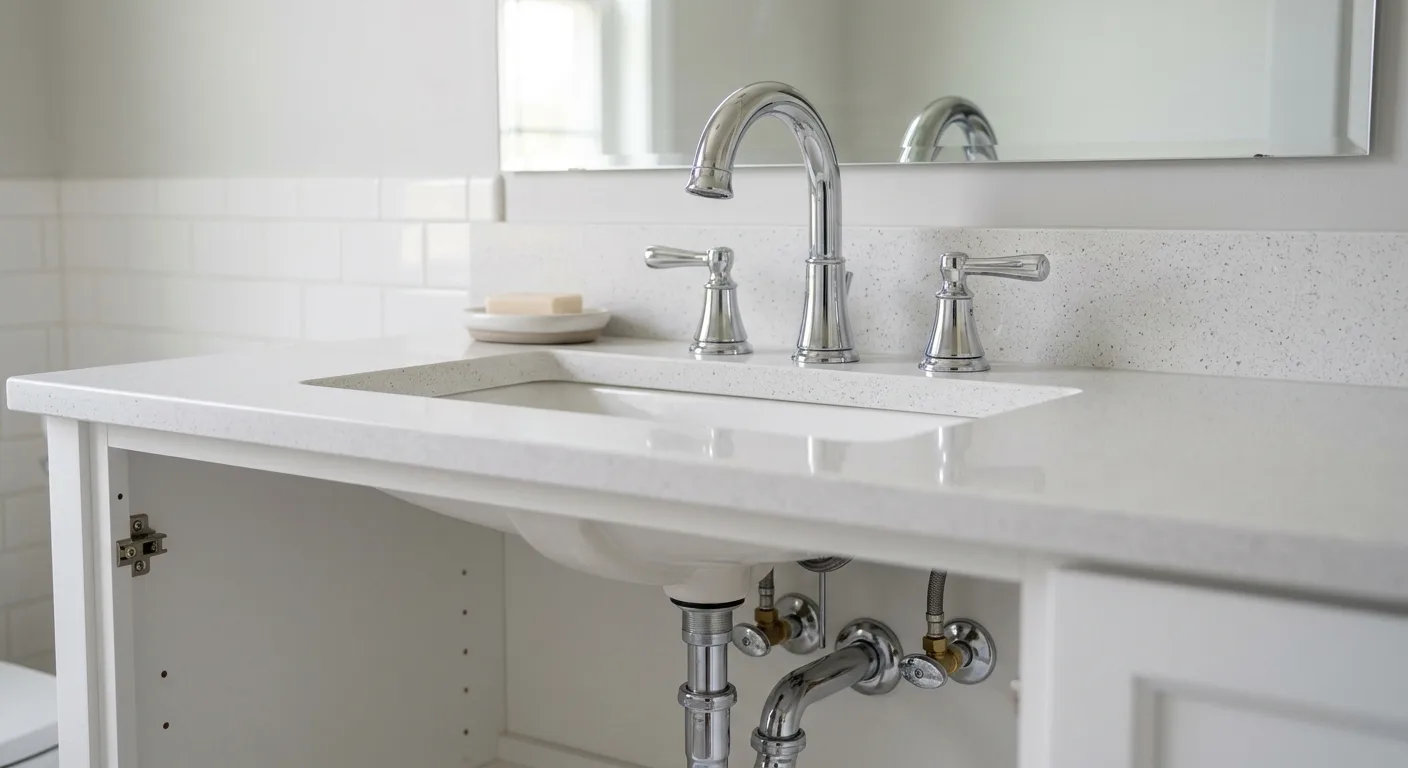
Gas line repair at a corroded threaded joint in a Gaithersburg, MD home

Smell Gas in the House? Here's What to Do Right Now

If you smell gas, treat it as a leak until proven otherwise, and get the sequence right: leave first, call from outside. Natural gas is odorized with mercaptan, that sharp rotten-egg smell, precisely so you notice it before it reaches a dangerous concentration. Don't wait to see if it goes away. Do these things in order, and do them from a neighbor's or the sidewalk once you're clear of the house.

  1. Get everyone out. People and pets, out the door, no exceptions. A strong, steady gas smell is not something to investigate yourself.
  2. Don't create a spark. Leave lights, switches, the garage door opener, and appliances exactly as they are. Don't light a match, don't strike a lighter, don't unplug anything. A spark is what turns a leak into an event.
  3. Don't use your phone inside. Once you're outside and clear, then call.
  4. Call Washington Gas or 911 from outside. Washington Gas serves natural gas across Montgomery County and runs a 24-hour emergency line. They come and shut the gas off at the meter. That is the emergency response, and it comes before any plumber.
  5. Call us after the gas is off. Once the utility has made the house safe, (301) 834-2944 is who you call to locate the actual fault and repair the line so it can be put back in service.

A faint whiff near one appliance that comes and goes is a different situation than a house you can smell from the driveway. The faint one is often a loosened fitting or a pilot that's out, and it's worth a call rather than a panic. The strong, spreading one is an evacuate-and-call-the-utility situation, every time. When you're not sure which you've got, err toward getting out and calling the utility. Call (301) 834-2944 once it's safe and we'll take it from there.

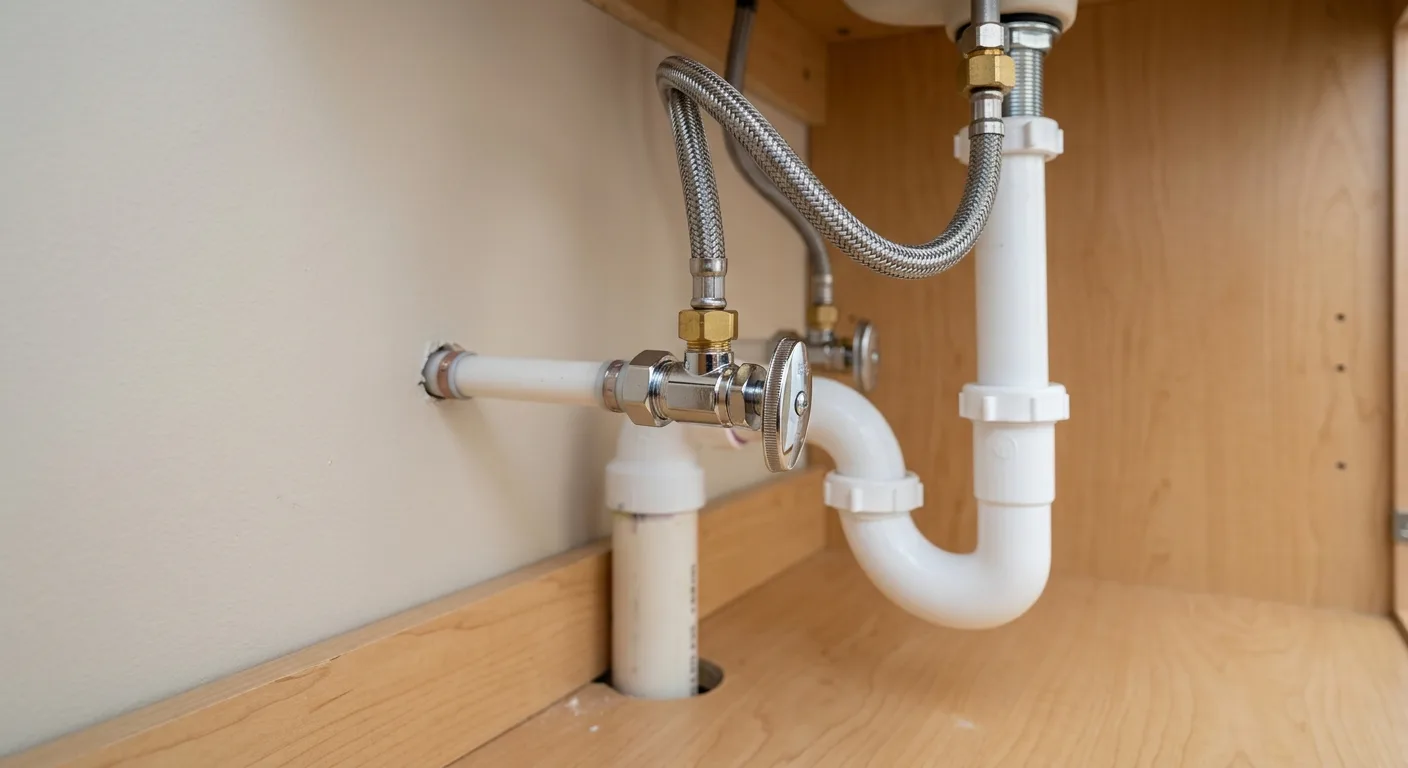
New gas appliance line installation and pressure test in a Montgomery County, MD home

Gas Line Repair: Where the Leaks Actually Start

Gas line repair almost always comes down to the joints, not the middle of a pipe run, and on the older black-iron systems common across Gaithersburg that's a corrosion-at-the-threads story. Threaded steel connections are where the pipe dope or tape ages out and where rust works its way into the seal, so a seep starts as a smell near a fitting long before it becomes anything worse. The repair is rarely the whole line. It's the failed section and the joints around it, done properly and pressure-tested before it goes back into service.

On these older Montgomery County homes, nine gas leaks out of ten are at a threaded joint, not a split pipe. Find the joint, cut back to sound metal, re-thread and re-seal it, then pressure-test the whole run before anyone lights a pilot. That last step is the part cheap work skips.

Here's how a repair actually runs once the line is safe to work on:

  1. Isolate and confirm. The section gets isolated and the leak located with a proper gas detector and a soap test at the joints, not a guess. We confirm the source before cutting anything.
  2. Cut back to sound metal. Corroded threads and pitted pipe come out. On black iron that means cutting back past the rust to steel that still holds a thread.
  3. Re-pipe the section. New pipe, correctly sized for the appliance load, threaded and sealed with rated compound. On some runs a move to CSST or a proper repipe is the smarter long-term call, and we'll tell you when it is.
  4. Pressure-test and inspect. The line gets pressure-tested and, for permitted work, county-inspected before it's put back into service. Nothing gets relit until it holds.

Repeated small seeps on an old black-iron system that's failing at joint after joint is a different conversation than one bad fitting. At that point you're weighing section repairs against a gas repipe, the same way you'd weigh patching versus replacing water lines. Describe the history when you call and we'll tell you straight which way the math points. Call (301) 834-2944 and tell us where you smell it and how often.

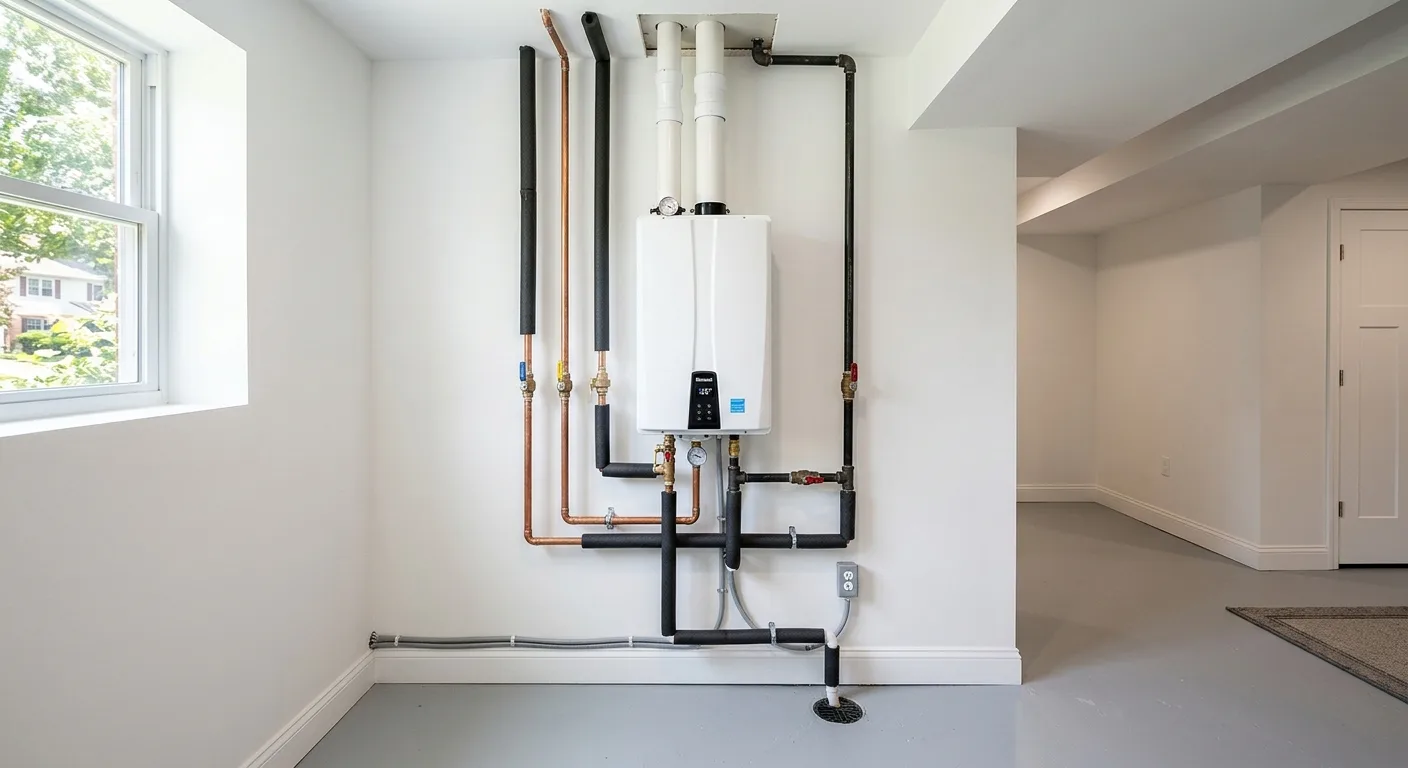
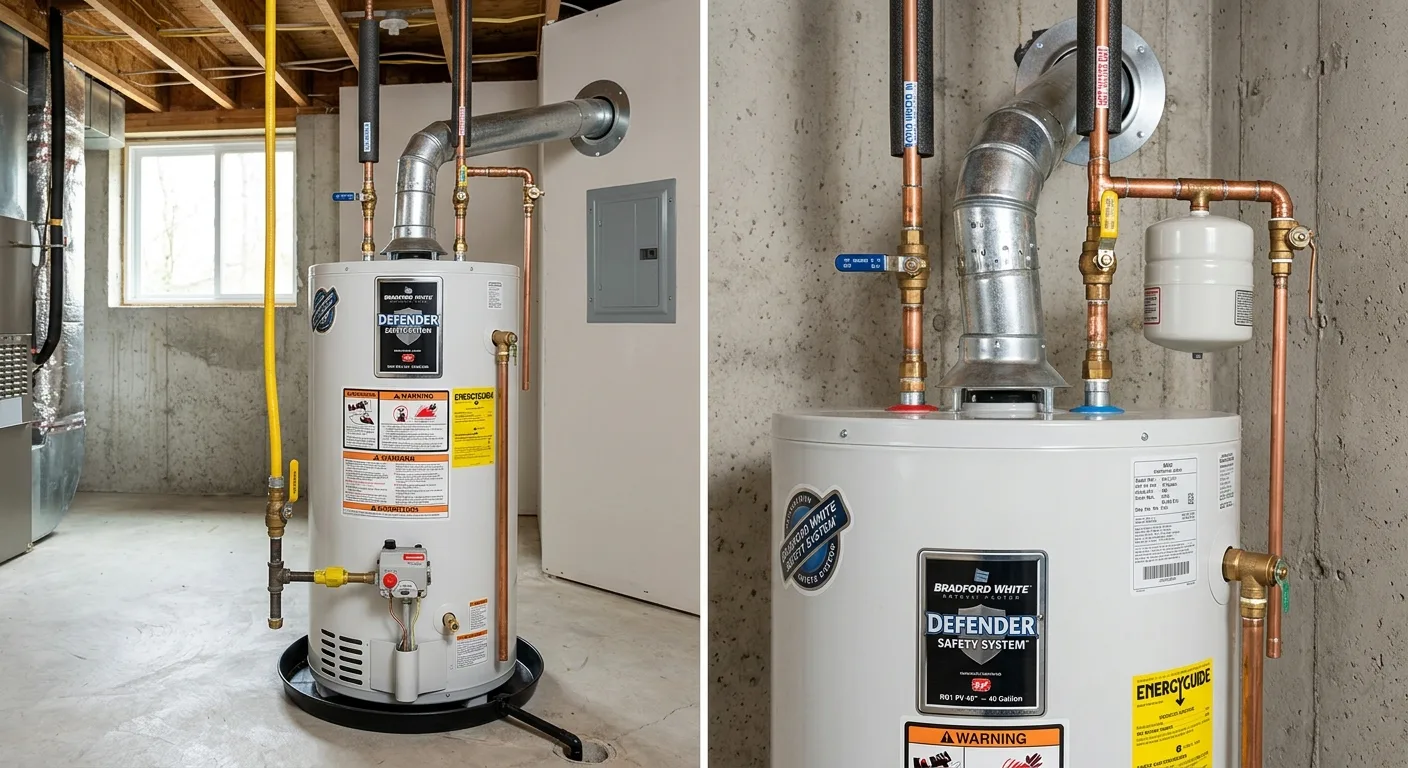
Gas connection to a water heater checked for leaks in a Maryland home
New gas lines and hookups

Gas Line Installation: New Lines and Appliance Connections

Details below
Gas line installation in Gaithersburg is a permitted, pressure-tested, inspected job, whether it's a brand-new run to a spot that never had gas or a connection for a specific appliance. The line has to be sized for the appliance's demand and for everything downstream of it, which is the part that gets skipped on cheap work and shows up later as an appliance that never quite performs. We diagnose the whole gas load before we run a foot of pipe.

Range and cooktop lines

A gas line for a range or cooktop hookup, whether you're converting from electric or replacing an existing unit. New shutoff at the appliance, a sediment trap at the drop so debris in the line never reaches the burner orifices, a correctly sized line, and a leak test at the connection before you cook on it.

Gas dryer lines

A gas line for a dryer hookup is a common conversion in these homes. It needs its own shutoff and a proper connector rated for gas, not a lookalike. We size it right and test it before it runs.

Water heater gas connections

New or replacement gas connections for a tank or tankless heater. A tankless conversion often needs a larger gas line than the old tank used, which is exactly why some tankless installs underperform. We check the sizing first, tied into our water heater work.

Generator and outdoor appliance lines

Standby generators, gas grills, fire pits, and pool heaters all need a properly sized, permitted line run to them. Outdoor gas work has its own code requirements, and we install it to pass inspection the first time.
Gas line repair at a corroded threaded joint in a Gaithersburg, MD home

Why Permits and Pressure Testing Aren't Optional Here

Montgomery County requires a permit and a county inspection for gas line work, and that's not red tape to work around, it's the thing that protects you. A gas line that was run without a permit and never inspected is a line no one confirmed holds pressure, and it's also a problem the day you sell the house and it turns up at inspection. We do it the way the county requires because that's the only way that's actually safe.

Owner-operated and insured means the person who pulls the permit is the person who runs the pipe and stands in front of the inspector. There's no crew you've never met, no commission structure pushing an upsell, and no incentive to skip the test to save an hour. You get the line done to code, tested, and signed off, and you get a straight answer about what it needed and why. Planning a new appliance line or a conversion? Request a free estimate through the contact form and we'll scope the gas load before quoting.

New gas appliance line installation and pressure test in a Montgomery County, MD home

Dead Grass Over a Buried Line and Other Warning Signs

Not every gas problem announces itself with a strong smell. Some of the earliest signs of a failing gas line are quiet, and knowing them means you catch a seep before it becomes an evacuation. If you notice any of these, it's worth a call even without a dramatic odor.

  • A faint, intermittent gas smell near one appliance or along a wall. Often a loosening fitting or an aging joint. Worth locating before it grows.
  • Hissing or whistling near a gas line, meter, or appliance connection. Gas escaping under pressure makes noise. Don't ignore it.
  • A patch of dead or dying grass or plants over a buried gas line with no other explanation. Escaping gas underground kills vegetation from the roots, and a dead stripe over a known line run is a classic buried-leak tell.
  • A gas appliance that keeps losing its pilot or burns with a lazy yellow flame instead of crisp blue. That can point at a supply or line issue, not just the appliance.
  • A higher gas bill with no change in usage. Gas you're paying for that isn't reaching the appliance has to be going somewhere.

A dead stripe of grass over a gas line you know is there is not a lawn problem. That's gas escaping underground, and it's worth a call the same day, even if you can't smell a thing standing over it.

None of these is a reason to panic, and none of them is the strong, spreading, get-out-now smell that means call the utility. They're the early signals that a line is starting to fail, and catching one now is how a small repair stays small. Notice one of these? Call (301) 834-2944 and describe it, and we'll tell you whether it needs a same-day look or a scheduled visit.

Free, no-pressure estimate

Gas Leak, Line Repair, or a New Appliance Hookup?

If you smell a strong, steady gas odor right now, stop reading, leave the house, and call Washington Gas or 911 from outside first. For gas line repairs, new gas lines, and appliance connections once things are safe, describe it to the Holdsy Plumbing team directly at (301) 834-2944: where you smell it, which appliance, and whether it's a repair or a new hookup. For a planned installation or conversion, use the contact form to request a free estimate and we'll scope the gas load before quoting.

Call now (301) 834-2944
5 · 147 Google reviews
Or send us your info
Gas line repair at a corroded threaded joint in a Gaithersburg, MD home
FAQ Common questions

Frequently Asked Questions

Answers below
I smell gas in my house. What should I do? +
Treat it as a leak. Get everyone out of the house immediately, don't touch light switches, appliances, or your phone inside, and don't light anything. Once you're outside and clear, call Washington Gas or 911, they run a 24-hour emergency line and will come shut the gas off at the meter. That is the first call, before any plumber. Once the utility has made the house safe, call us at (301) 834-2944 to locate and repair the actual fault so the line can be put back in service. For a faint, intermittent smell near one appliance that isn't spreading, it's still worth a same-day call, but the strong, steady, house-filling smell is an evacuate-and-call-the-utility situation every time.
How much does gas leak repair cost? +
It depends entirely on where the leak is and how much line is affected. A single corroded threaded joint on an accessible run is the low end: isolate it, cut back to sound metal, re-thread and re-seal, then pressure-test. A leak on a buried line, or repeated failures across an old black-iron system that's giving out at joint after joint, costs more because it's more pipe and more access work, and at that point a partial repipe can be the smarter money than chasing seeps one at a time. Permitted gas work also includes the county permit and inspection. Holdsy Plumbing diagnoses the actual fault first and quotes off what's really wrong, not a flat mystery fee, and we won't lowball a number over the phone that doubles when we arrive.
Do you need a permit for gas line work in Montgomery County? +
Yes. Montgomery County requires a permit and a county inspection for gas line installation and most gas line repairs, and the line has to be pressure-tested and signed off before it's put back into service. That's not optional, it's the step that confirms the line holds and protects you at resale. We pull the permit, run the work to code, pressure-test the line, and get it inspected. If someone offers to do gas work without a permit, that's the corner they're cutting, and it's the one that matters most on gas.
Can you run a new gas line for a range, dryer, or generator? +
Yes. We install new gas lines and appliance connections for gas ranges and cooktops, gas dryers, tank and tankless water heaters, standby generators, and outdoor appliances like grills, fire pits, and pool heaters. The key is sizing: the line has to carry the appliance's demand plus everything downstream of it, which is what gets skipped on cheap work and shows up later as an appliance that never performs right. A tankless water heater conversion, for example, often needs a larger gas line than the old tank used. We scope the whole gas load, size the line correctly, pull the permit, and pressure-test the connection before you use it. Use the contact form for a free estimate or call (301) 834-2944 to talk it through.
Why is the grass dead over my gas line? +
A patch of dead or dying grass or plants over a buried gas line, with no other explanation, is a classic sign of an underground gas leak. Escaping gas displaces oxygen at the roots and kills vegetation from below, so a dead stripe that follows the path of a line you know is there is worth taking seriously, even if you can't smell anything standing over it. It's not a lawn problem. Call (301) 834-2944 and describe where the line runs and what you're seeing, and if you ever do smell a strong gas odor, leave and call Washington Gas or 911 first.

Related