
Family-owned · Gaithersburg Local
Water Softener Installation in Gaithersburg, MD
Sized to your actual hardness, not to whatever's on the shelf.
5147 reviews
FreeEst.
Instant Quote
Get an estimate.
We'll follow up within one business day. No pressure, no upsells.
Water Softener Installation and Service
Water softener installation in Gaithersburg is worth doing when hardness is costing you something you can point at: scale on fixtures, spotted glassware, stiff laundry, and a water heater aging faster than it should. County supply through WSSC runs moderately hard, roughly 7 to 11 grains per gallon, which is enough to matter over years. Call (301) 834-2944 and we'll check your actual hardness before recommending a size.
A softener removes calcium and magnesium through an ion exchange resin, and it needs salt to keep doing it. That's the trade: fewer scale problems in exchange for a system that asks something of you. The other decision people rush is size, and getting the grain capacity right for your hardness and household is what separates a unit that runs quietly for years from one that burns salt and wears out early.
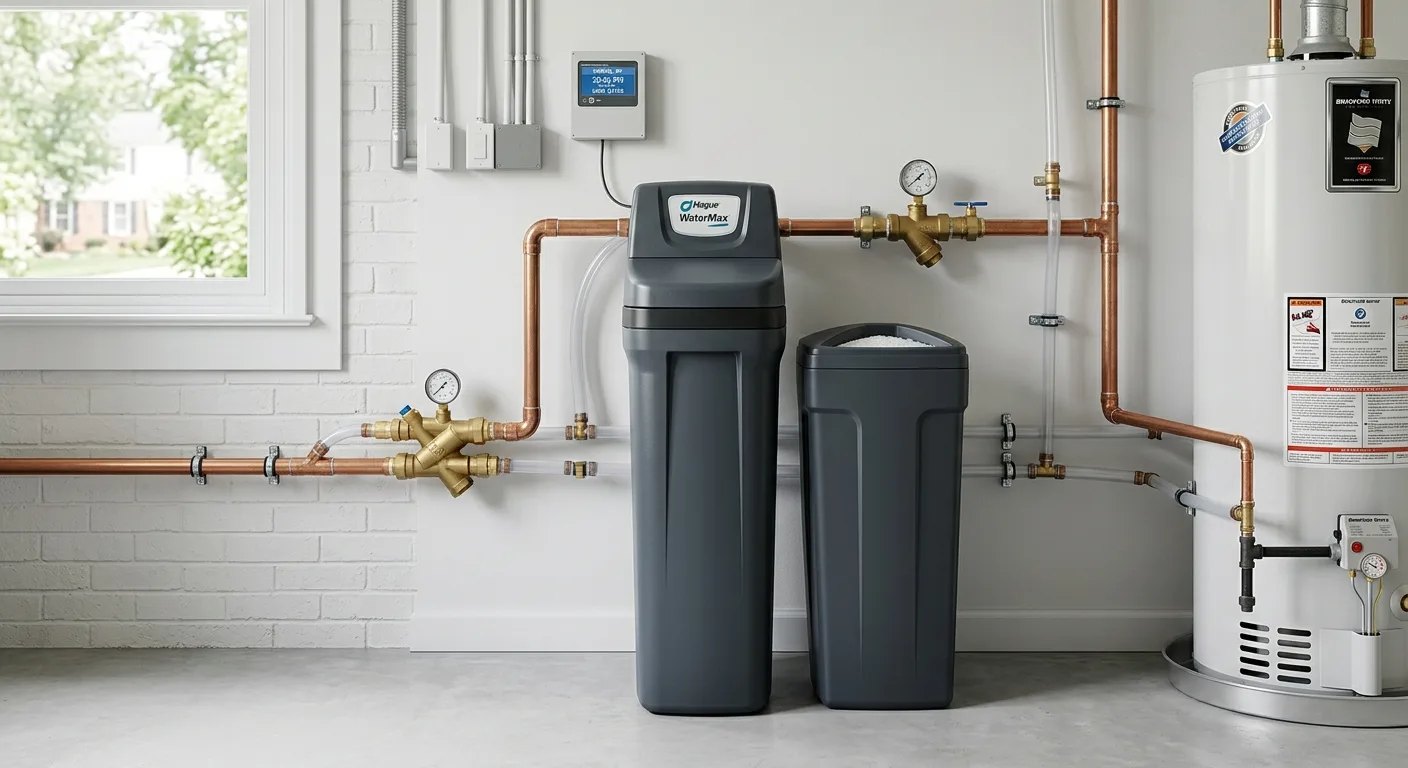
Completed water softener installation in a Maryland home
How We Size a Water Softener for Your Home
Grain capacity is the number that matters, and it comes from multiplying three things: how many people live there, how much water each person uses in a day, and your hardness in grains per gallon. A four-person home on WSSC water in the 7 to 11 grain range lands in a very different size class than a two-person home, and both are different again from a well home running 15 or 20 grains.
That's why we test hardness on site rather than sizing off the box. Two homes on the same street, same square footage, can need different units because one has a family of five and a soaking tub and the other is a retired couple. Shelf units are sold to averages. Your house isn't an average.
It installs at the main, after the meter, so the whole house gets treated. One decision worth making deliberately is whether to leave an outside spigot and the kitchen cold tap on untreated water; plenty of people prefer unsoftened water for drinking and the garden. Call (301) 834-2944 and we'll run the numbers before we quote a size.
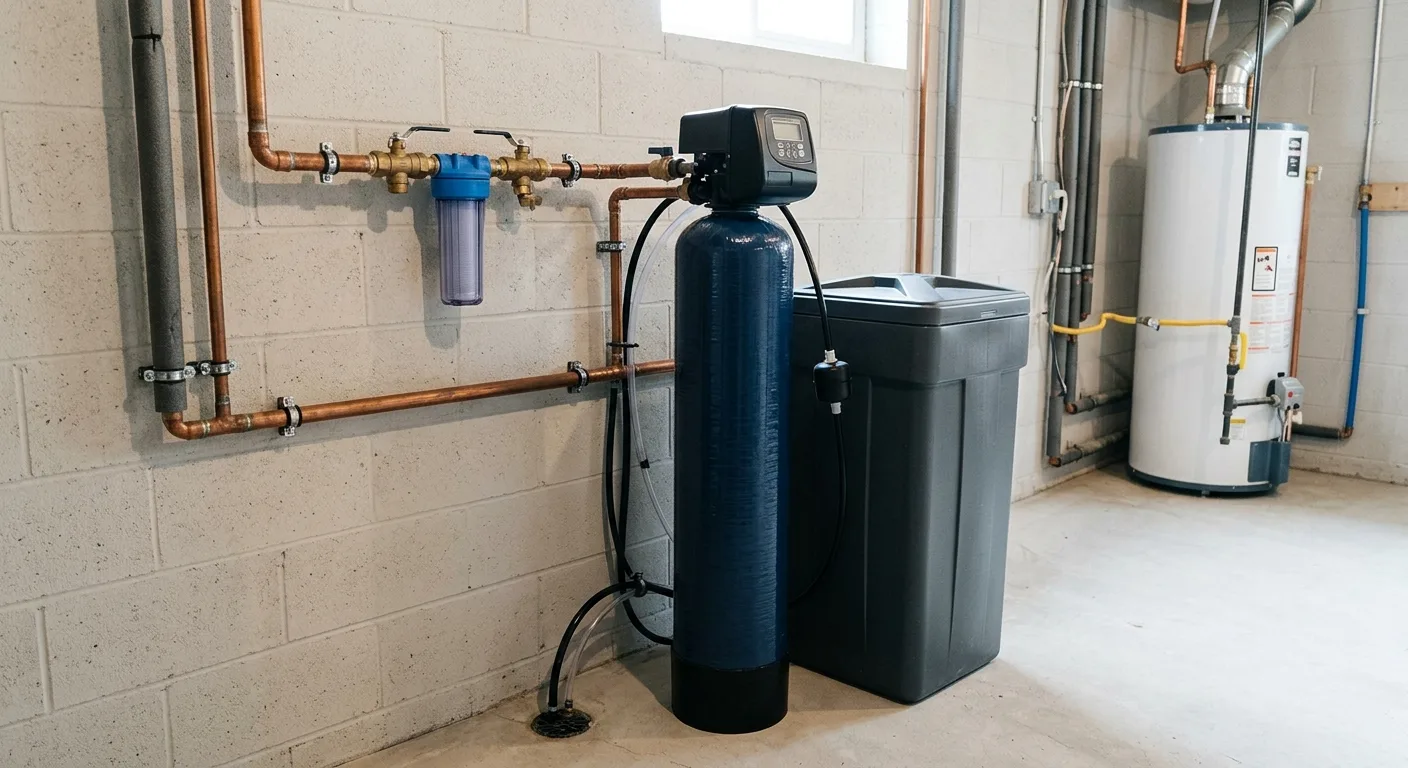
Water softener installation detail in a Maryland home
County Water and Private Wells Size Differently
On WSSC county supply the hardness is fairly predictable, moderately hard, so sizing is mostly about household demand. The water arrives treated and consistent, and a correctly sized softener is usually the whole job.
"On a well we're not just sizing for hardness. We're sizing around whatever else the water is carrying, because iron will foul softener resin if it goes straight through."
Wells in the upper county, out toward Damascus, Clarksburg, and Poolesville, are a different conversation. They often run harder than county water, sometimes 15 grains or more, and they frequently carry iron or sulfur alongside the hardness. That changes both the size and the order of the equipment. Iron gets treated ahead of the softener rather than through it, because sending it straight in shortens the resin's life considerably. If your supply itself is also acting up, that's a good moment to look at well pump service at the same time so it's one diagnosis rather than two.
Either way, the water treatment plan starts with a test. We'd rather spend twenty minutes measuring than have you living with a unit sized for the wrong water.
Signs Hardness Is Costing You
Details below
Spotted glassware
Soap that won't lather
Water heater rumbling early
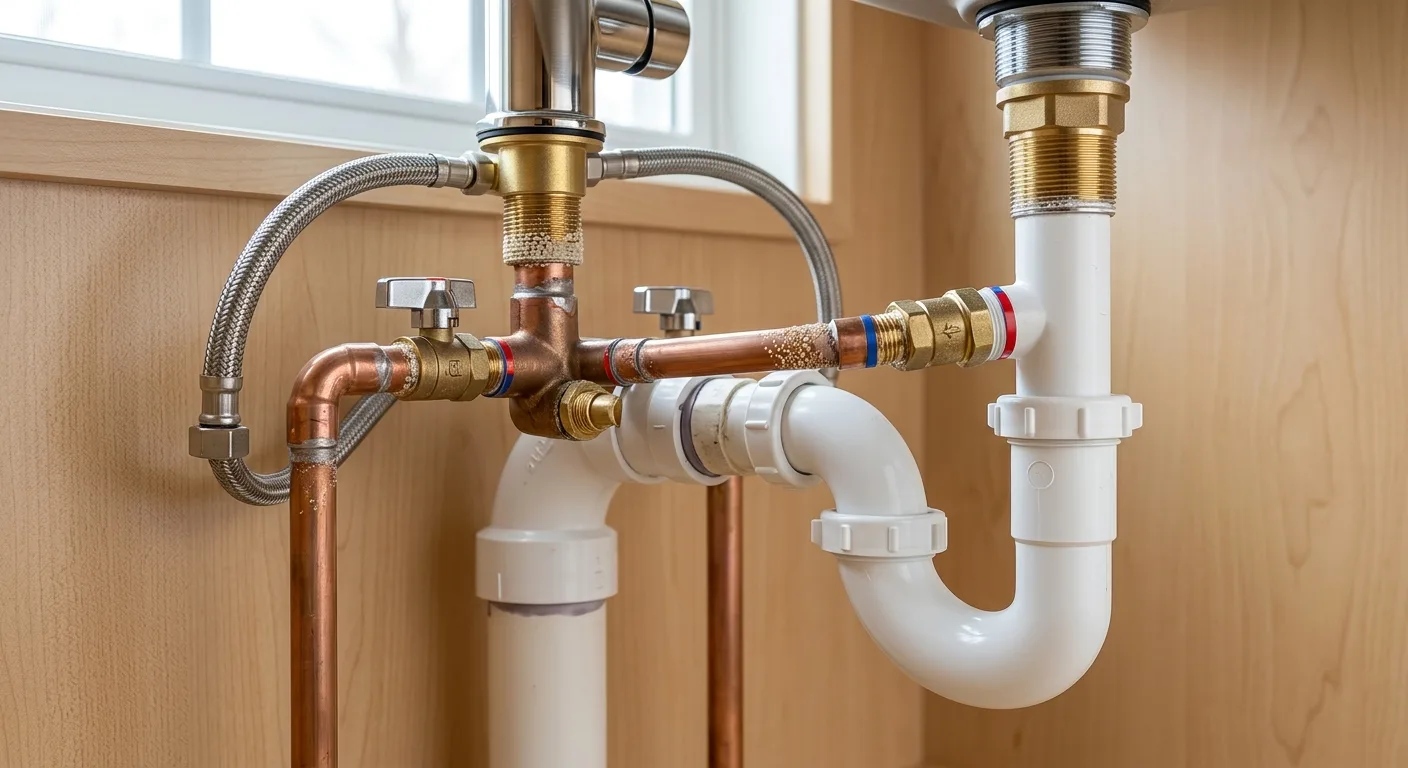
Completed water softener installation in a Maryland home
What It Asks of You
Salt, on a schedule that depends on your hardness and usage. Anyone quoting a bags-per-month number without knowing either is guessing.
The resin lasts years, and it lasts longer when iron and sediment are handled upstream. Occasional cleaning of the brine tank is the only other routine task.
We also service units other companies installed, including ones that were specified for the wrong hardness. Call (301) 834-2944 and describe what yours is doing.
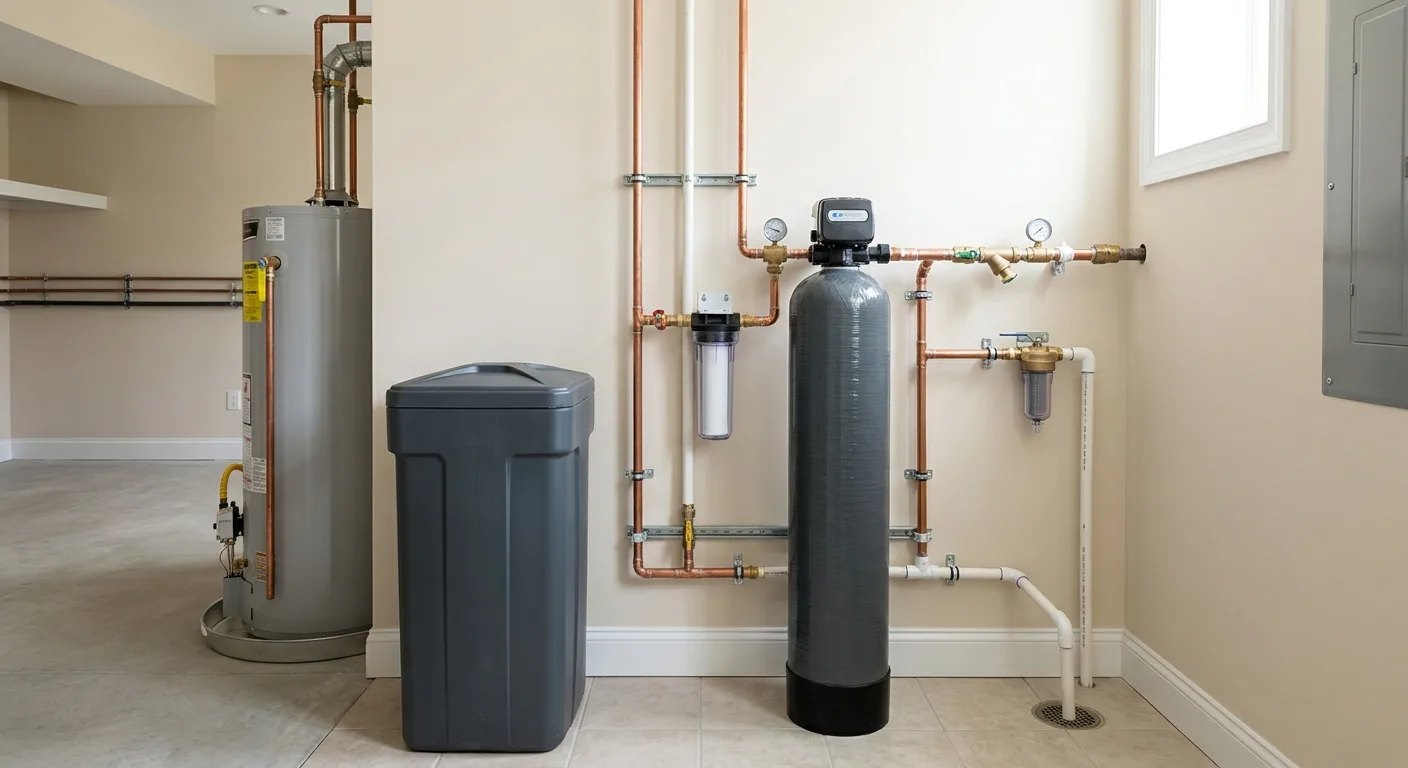
Water softener installation detail in a Maryland home
Salt-Free vs Salt: What the Difference Actually Is
A salt-free system is not a softener, and the naming causes a lot of grief. A true softener uses salt to run ion exchange, which physically removes the calcium and magnesium. Salt-free equipment, sometimes sold as a water conditioner, conditions the water instead, altering how the minerals behave so they're less likely to stick as scale, but the minerals are still in the water.
That distinction decides which one is right for you:
- Choose salt-based when you want the classic soft-water result: no scale, spot-free glassware, soap that lathers, softer laundry. It removes hardness outright. - Choose salt-free when your goal is mainly scale protection for pipes and the water heater, you don't want to handle salt, and you can live without the slick soft-water feel. - Skip both for drinking either way. Neither is a drinking-water treatment. If taste is the concern, reverse osmosis at the kitchen is the piece that handles it.
Salt-free has a genuine appeal: no brine tank to fill, no salt to buy, no discharge. The trade is that it doesn't deliver the soft feel and it doesn't strip hardness the way ion exchange does. We fit both. What we won't do is sell you a salt-free unit while calling it a softener, because that's how people end up disappointed.
Free, no-pressure estimate
Scale, Spots, or Stiff Laundry?
Tell us whether you're on county water or a well. Call (301) 834-2944, or request a free estimate through the contact form.
Call now (301) 834-2944 5 · 147 Google reviews
Or send us your info
FAQ Common questions
Frequently Asked Questions
Answers below
Is Gaithersburg water hard enough to justify a softener? +
County water from WSSC sits in the moderately hard range, which is enough to leave scale and shorten water heater life over years. Whether it justifies the equipment depends on how much the symptoms bother you. Private wells in the upper county are often harder again.
Will softened water taste salty? +
No. The salt regenerates the resin and is flushed out; it doesn't end up in your drinking water in any quantity you'd taste. If sodium is a dietary concern, leaving the kitchen cold tap unsoftened or adding reverse osmosis handles it.
Can I put a softener on well water? +
Yes, but check for iron first. Iron fouls softener resin and shortens its life, so it gets treated ahead of the softener rather than through it. A test tells you what order the equipment needs to go in.
What size water softener do I need? +
Size is grain capacity, and it comes from your household size, daily water use, and your hardness in grains per gallon. A four-person home on WSSC water (roughly 7 to 11 grains) sizes differently than a well home running 15 grains or more. The target is a unit that regenerates every three to seven days, not daily. Undersize it and it burns salt and wears out early; oversize it and you paid for capacity you'll never use. We test hardness on site rather than sizing off the box, because two homes the same size can need different units.
Is a salt-free system as good as a softener? +
They do different things. A salt-based softener removes hardness through ion exchange, so you get the classic soft-water result: no scale, spot-free glasses, soft laundry. A salt-free system conditions the water so minerals are less likely to scale, but the hardness is still in the water and you don't get the soft feel. Salt-free wins if you want scale protection without handling salt. Salt-based wins if you want genuinely soft water. We fit both and we won't call one the other.