
Hardness
Grains per gallon. Scale, spots, and stiff laundry come from here. If it's high enough to bother you, that points to a water softener.
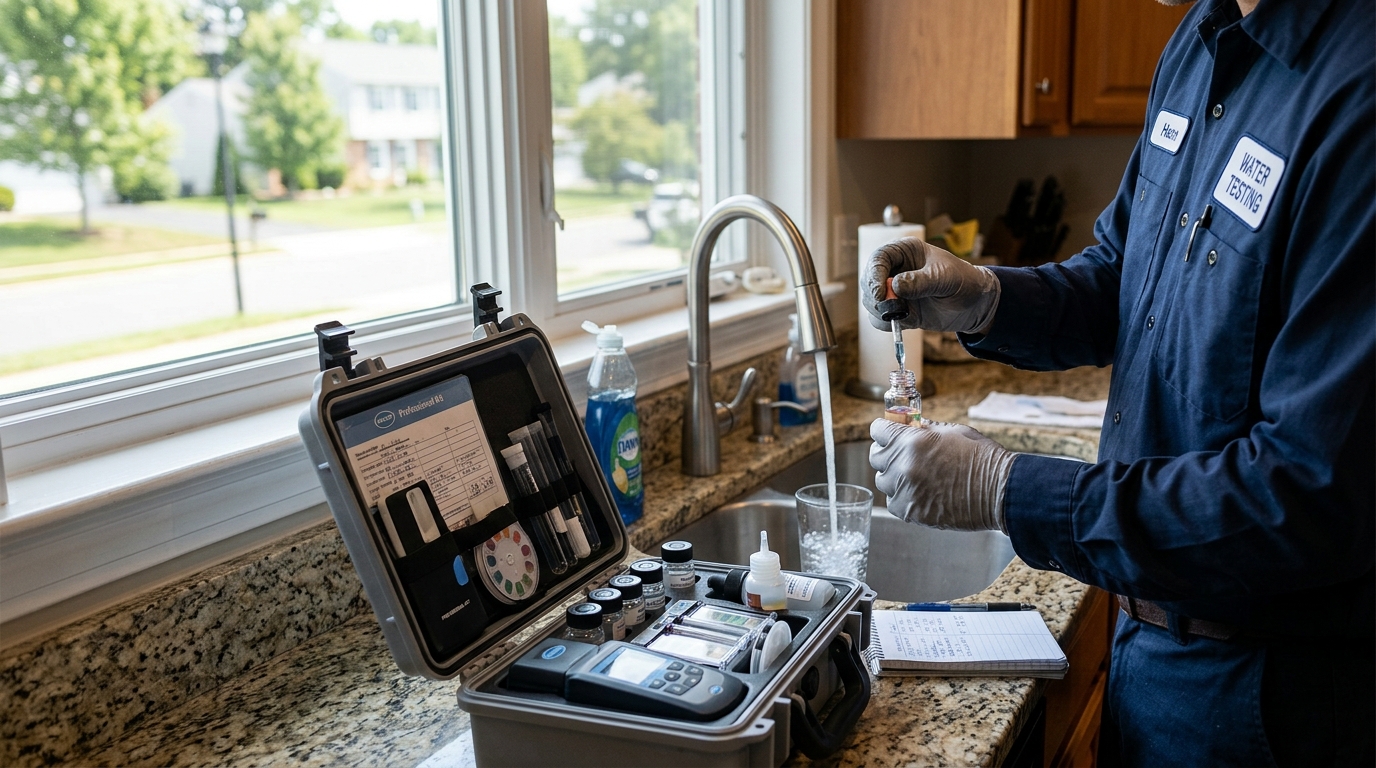
We test what's actually in your water before anyone talks about equipment, on county supply or a private well.
We'll follow up within one business day. No pressure, no upsells.
Holdsy Plumbing's water quality testing in Gaithersburg, MD answers one question before you spend a dollar on equipment: what's actually in your water. Maybe the glasses come out spotty, the water smells off, or you just moved onto a private well and don't know what you inherited. We test hardness, iron, sulfur, and clarity on site, explain what the numbers mean, and only then talk about treatment. Call (301) 834-2944 and say whether you're on county water or a well.
Chase Holdsworth owns Holdsy Plumbing and does the work himself, and the honest position here is that we'd rather test than sell. A test can just as easily tell you your water is fine as tell you it isn't. If the result says your WSSC supply is moderately hard and nothing else is wrong, we'll say so and you keep your money. When the result does point to a real problem, the test decides which system fixes it, so you don't buy a softener for a smell a softener can't touch.
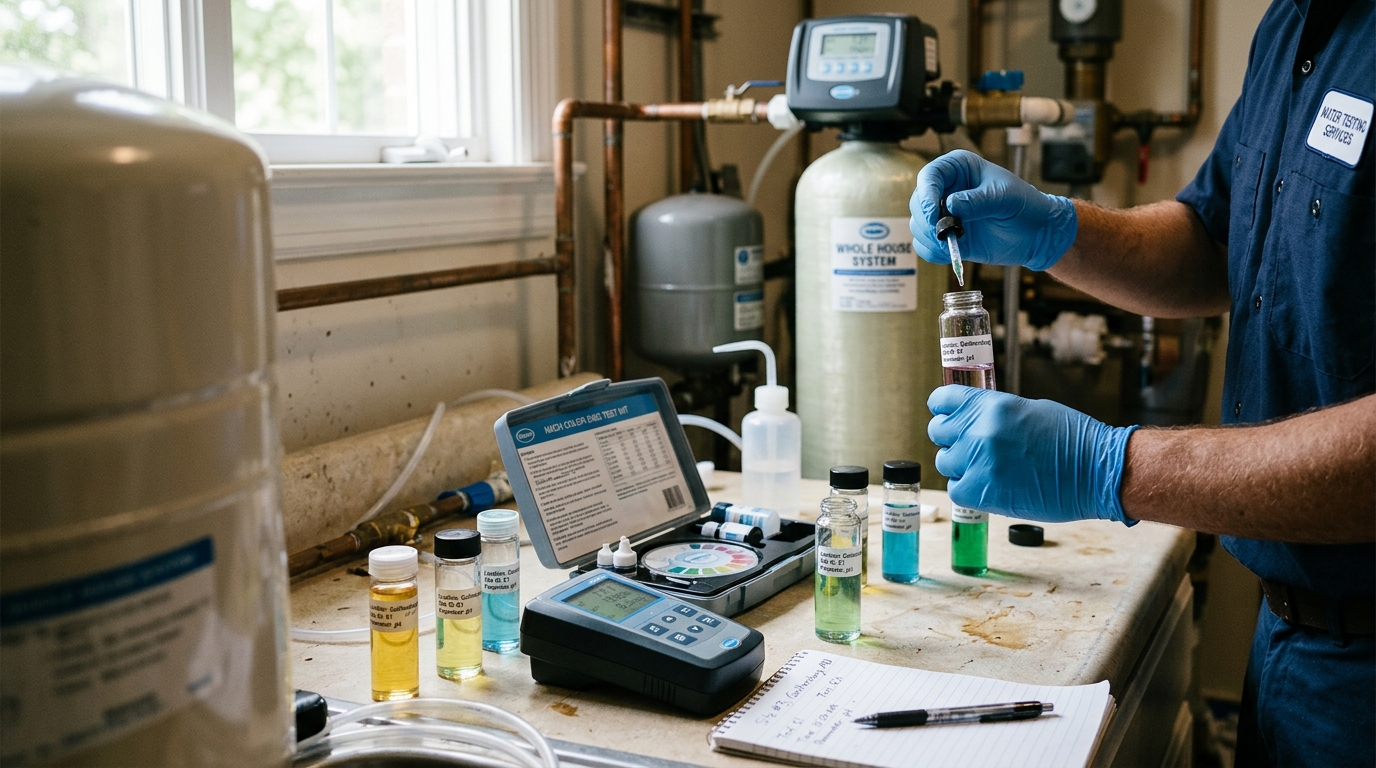
Water quality testing vials and a hardness test kit on a Maryland home countertop
A water test in Gaithersburg means something different depending on where your water comes from, and that's the first thing we sort out. County supply through WSSC arrives already treated and fairly consistent, so a test here is mostly about confirming hardness and whether taste or chlorine is bothering you. Private wells are a different job entirely, because nobody treated that water before it reached your tap.
What we look at on site is practical: hardness in grains per gallon, visible iron or rust staining, a sulfur (rotten-egg) smell, sediment and clarity, and taste complaints you can point to. We're not running a lab; we're measuring the things that decide whether treatment makes sense and, if it does, which kind. When a well needs a certified lab panel for bacteria, nitrates, or something beyond what a field test reads, we'll tell you that plainly rather than guess. Call (301) 834-2944 and describe what you're noticing.
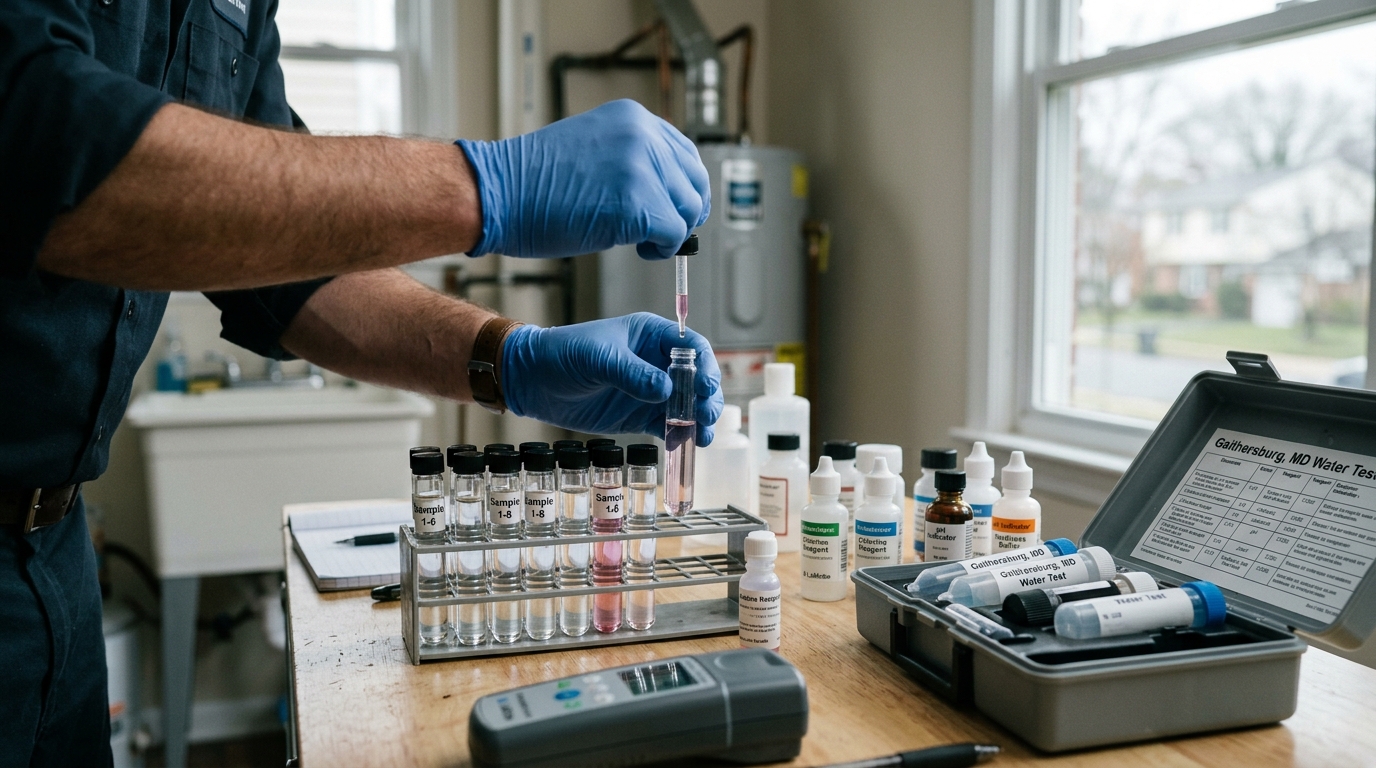
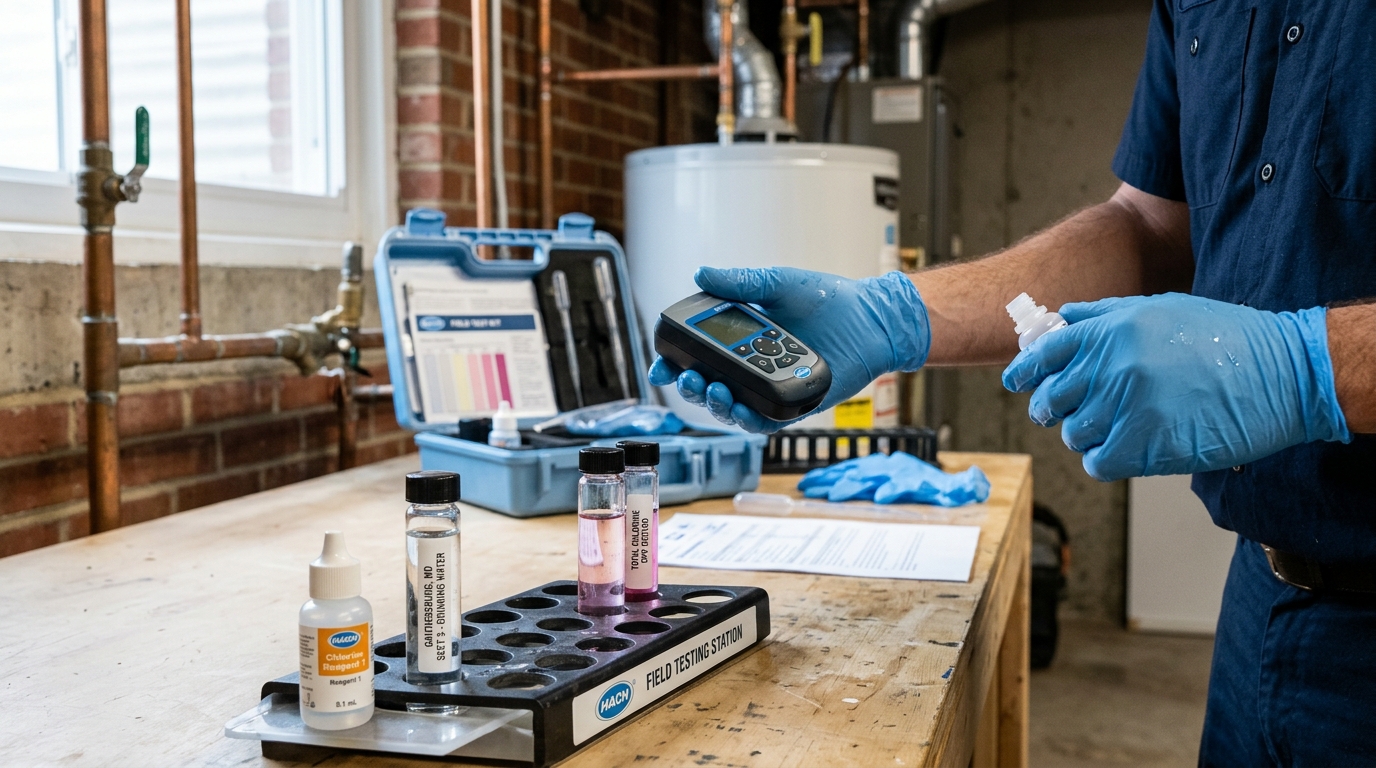
Water clarity and sediment test detail for a Montgomery County private well
Well water testing in Montgomery County is where a test stops being optional and becomes the only responsible way to start. Private supply out toward Damascus, Clarksburg, and Poolesville isn't treated by anyone before it reaches your house, and two wells a mile apart can read completely differently. One brings hardness plus iron; the next carries sulfur; a third looks clean until a wet spring changes it.
"On a well we test first every time, because the water writes the equipment list. Sizing a system off an assumption is how people end up with a softener fouling on iron it was never built to handle."
That variability is exactly why we won't quote a well home off the phone. Iron has to be treated ahead of a softener, not sent through it, or it shortens the resin's life considerably. Sulfur needs its own step. Sediment ahead of everything. The order of the equipment matters as much as the equipment itself, and only a test tells us the order. If the well's pressure or supply is also acting up, that's a good moment to look at well pump service at the same time so it's one diagnosis instead of two.
For anything a field test can't cover, bacteria or nitrates on a well that serves drinking water, we'll point you to a certified lab panel and help you make sense of the results. We won't pretend a hardness strip answers a bacteria question. Call (301) 834-2944 and tell us where your well is and what it's doing.
Water quality testing vials and a hardness test kit on a Maryland home countertop
The reason we lead with testing is simple: a softener, a filter, a conditioner, and a reverse osmosis system all solve different problems, and installing the wrong one means you keep the complaint and gain a maintenance chore. A test is the cheapest way to avoid that.
Here's how the common results map to a fix:
- High hardness, nothing else points to a water softener, sized to your grains and household. - Chlorine taste, sediment, or odor across the whole house points to whole-house filtration at the main. - A drinking-water concern about taste or dissolved solids points to reverse osmosis under the kitchen sink, not the whole house. - Well water with iron or sulfur points to targeted treatment ahead of any softener, which is why the water treatment plan always starts with the test.
Sometimes the result is the best news of all: your water is fine and you don't need anything. We'll tell you that too. Get a free estimate or call and we'll walk through what your numbers mean before anyone talks equipment.
Well water sample being compared against a hardness color chart during a Gaithersburg water test
Testing is the right first move for most water complaints, but it isn't always the call, and it's worth saying so.
The honest version: if you're on county water and everything looks, smells, and tastes normal, you probably don't need us out to test it. Read WSSC's published report first. Where a test earns its keep is a private well, a new home you don't know the history of, a sudden change in taste or clarity, or visible staining you want pinned to a cause before you spend on equipment. If you're not sure which bucket you're in, call (301) 834-2944 and we'll tell you honestly whether a visit is worth your time.
Tell us whether you're on county water or a well, and what you're noticing: spots, staining, smell, or taste. Call (301) 834-2944, or request a free estimate through the contact form.
Call now (301) 834-2944