Signs Your Gaithersburg Home Has Hard Water
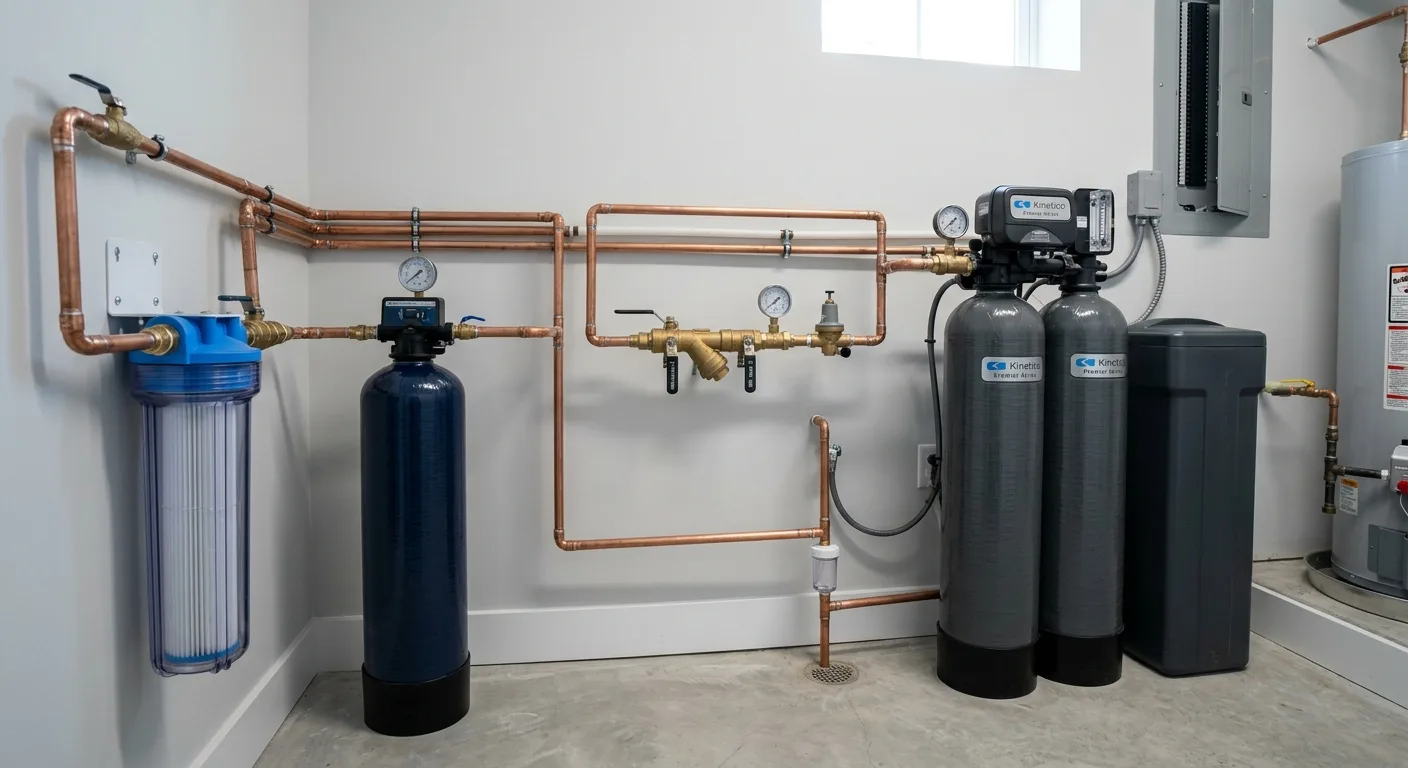
The signs of hard water in a Gaithersburg home are easy to miss until they add up: a white crust creeping up the faucet, glasses that come out of the dishwasher spotty, laundry that feels stiff, and soap that never quite lathers. Here's the part most articles skip. Montgomery County water from WSSC runs only moderately hard, roughly 7 to 11 grains per gallon, so if your symptoms feel severe you may actually be on a private well, where the real culprit is often iron or sulfur, not hardness at all. We test water before we recommend anything, because the wrong assumption gets you the wrong equipment. Call the shop with what you're seeing: (301) 834-2944.
"On WSSC water we see moderate hardness that shows up as slow scale, not dramatic damage. When someone describes brutal staining and ruined fixtures, my first question is whether they're on a well."
That distinction shapes this whole post. Homes on county water and homes on private wells in the upper part of the county have different water, different problems, and different fixes. Below are the symptoms, what causes each one, and how to sort a true hardness problem from a well-water iron problem that a softener alone won't solve.
Signs of hard water
The clearest signs of hard water are scale and residue: chalky white buildup on faucets and showerheads, cloudy spots on glassware, a filmy feel on shower walls, soap that won't foam, and stiff, dull laundry. Hard water is simply water carrying dissolved calcium and magnesium, and every one of those symptoms is those minerals coming out of solution and depositing on whatever the water touches.
Here's how the common symptoms map to what's actually happening:
| What you notice | What's causing it |
|---|---|
| White crust on faucets and showerheads | Calcium scale drying on the fixture |
| Spotty, cloudy glasses out of the dishwasher | Mineral film left as water evaporates |
| Soap and shampoo won't lather | Minerals binding the soap into scum |
| Stiff, scratchy laundry | Mineral residue trapped in the fibers |
| Low flow from a showerhead over time | Scale narrowing the spray holes |
None of these is an emergency. On moderate WSSC water they build slowly, over years, which is exactly why people live with them without connecting the dots. The fix, when it's warranted, is a softener sized to your hardness rather than a generic unit off a big-box shelf.
How to tell if you have hard water
To tell if you have hard water, run three quick checks: look for white scale on a faucet or showerhead, watch whether glasses dry spotty, and do the soap-and-bottle test. Fill a clear bottle a third full with water, add a few drops of pure liquid soap, cap it, and shake. Water that barely foams and turns cloudy is hard. Water that produces a thick, lasting head of suds is soft.
- Scale check: run a finger over the base of a faucet. Gritty white buildup means minerals are depositing.
- Glassware check: pull a glass from the dishwasher. Persistent cloudy spots that wipe away with vinegar are mineral, not soap.
- Soap-bottle test: little foam and cloudy water points to hardness; a tall stable head of suds points to soft.
- Kettle check: a crusty ring inside an electric kettle or the bottom of a pot is scale from boiled-off hard water.
"The soap-shake test tells you hard versus soft in thirty seconds. What it can't tell you is whether there's iron in the mix, and that changes the whole treatment plan."
These checks confirm hardness, but they don't measure it, and they don't catch iron or sulfur. Before we quote any treatment we run an actual hardness and mineral test, because a softener sized for 8 grains is the wrong machine for 18-grain well water. If you'd rather skip the guesswork, we'll test your water before treating it and tell you what's really in it.
Hard water vs iron in water: the well-water distinction
Hard water and iron in water are two different problems that get confused constantly, and the difference decides what equipment you need. Hardness is calcium and magnesium, and it leaves white or chalky scale. Iron leaves orange, red, or brown stains in sinks, tubs, and toilet tanks, and it's the far more likely offender on a private well in the upper county. A standard softener handles hardness. It does not fully handle heavy iron, and it doesn't touch the rotten-egg smell of hydrogen sulfide.
This is the distinction most competitors gloss over, and it's why we test rather than assume. In Damascus and Clarksburg we routinely find water that's both hard and iron-heavy, which needs a softener paired with iron filtration or an oxidizing filter ahead of it, not one machine trying to do everything. Selling a well owner a plain softener for orange staining is how you get a callback in six months when the staining never stopped. If your stains are colored rather than white, tell us that up front: (301) 834-2944.
Not sure you even have a problem worth treating? Read this.
Hard water and your water heater
Hard water shortens water-heater life by depositing a layer of scale on the bottom of the tank and the heating elements. In a tank heater that scale insulates the burner from the water, so the unit runs longer and less efficiently, and in the worst cases the sediment bakes into a hard crust that pops and rumbles when the burner fires. On moderate WSSC water this is a slow process. On harder well water it can noticeably cut the years you get out of a tank.
"The rumbling sound from a water heater is usually scale, not a failing tank. Flush it on schedule and you buy back years, especially on well water."
The maintenance answer is straightforward: drain and flush the tank periodically to clear that sediment before it hardens. On county water an annual flush is plenty. On hard well water we suggest flushing more often, and pairing the heater with a softener so scale stops forming in the first place. If yours is already rumbling or slow to recover, flushing sediment out of a hard-water tank is the first thing to try before you assume the heater is done.
Frequently asked questions
Does hard water damage water heaters?
Yes, over time. Hard water leaves calcium and magnesium scale on the bottom of the tank and on the heating elements, which makes the heater work harder, run less efficiently, and often causes a rumbling or popping sound as trapped sediment overheats. On moderate WSSC water the effect is gradual, and a periodic flush keeps it in check. On harder well water it can meaningfully shorten the tank's life, which is why we recommend both regular flushing and a softener. If your heater is rumbling, call (301) 834-2944.
How hard is the water in Gaithersburg and Montgomery County?
Most of Gaithersburg and central Montgomery County is served by WSSC at moderate hardness, roughly 7 to 11 grains per gallon. That's hard enough to cause slow scale and spotty glasses but usually not severe damage. Private wells in the upper county, around Damascus and Clarksburg, can run 15 gpg or higher and often carry iron and sulfur as well, which is a different problem entirely.
Do I need a water softener if I'm on county water?
Not necessarily. Moderate WSSC hardness is cosmetic for many households, and mild spotting can be managed with rinse aid and occasional cleaning. A softener earns its place when hardness is genuinely high, when scale is shortening your water heater's life, or when a well is adding iron. We test first and tell you honestly whether treatment is worth it, rather than sell a system by default. Ask us to test your water before treating it.
How do I tell hard water from iron staining?
Color. Hardness leaves white, chalky scale on fixtures and cloudy spots on glasses. Iron leaves orange, red, or brown stains in sinks, tubs, and toilet tanks, and a rotten-egg smell points to sulfur. A standard softener handles hardness but not heavy iron or sulfur, so getting this right before buying equipment matters, especially on a well. Send us a photo of the staining or call (301) 834-2944.